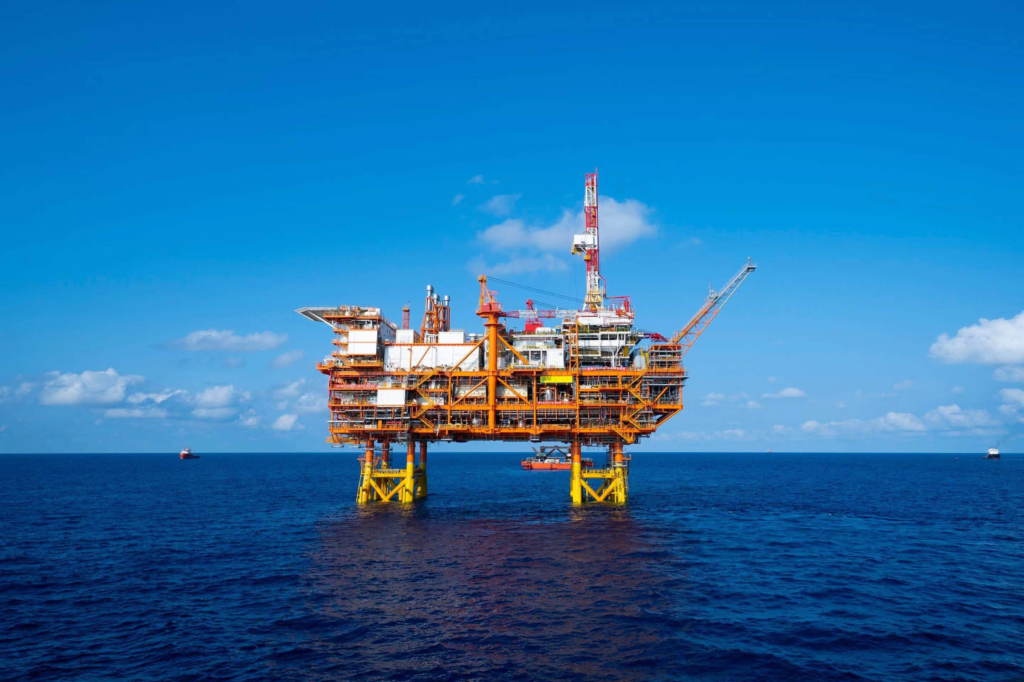
Why is the Umbilical Winch a Critical Piece of Equipment in Underwater Robot Testing? --- A Case Study of a 50kg System
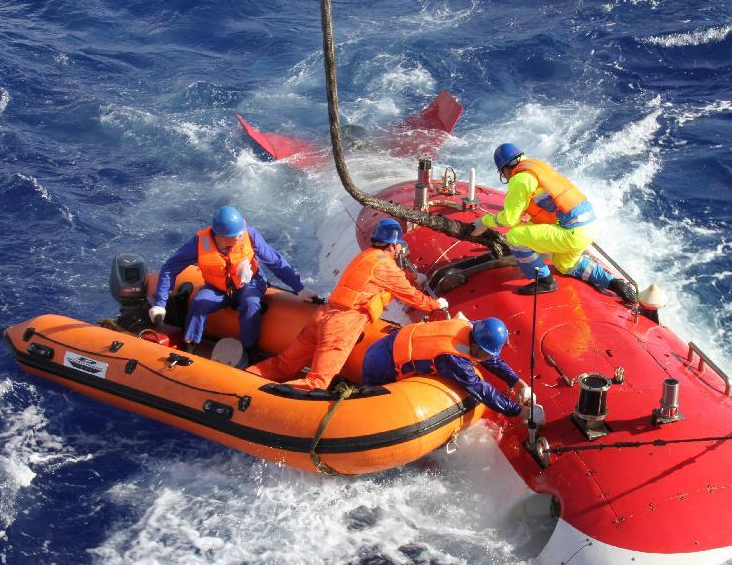
I. Project Background and Industry Challenges
In the fields of marine engineering and underwater equipment testing, the umbilical winch is often an overlooked piece of equipment. However, it directly impacts:
❗Cable lifespan
❗Test stability
❗Equipment safety
In scenarios such as towed operations involving unmanned underwater vehicles (UUVs) , ground tethering tests for airships, and power supply for mobile robots, equipment must be connected to the control system via composite cables. These cables integrate power supply, communication, fibre-optic signals, and even water and air lines.
As operational distances increase, cable management issues gradually become apparent: cable tangling, disorganised cable laying, unstable deployment and retrieval, cable wear, and potential safety hazards. Consequently, a specially designed cable winch system is required to ensure stable management.
II. Client's Core Technical Requirements
The client's key requirements included:
1️⃣ Stable deployment and retrieval of composite cables
2️⃣ Support for long-distance cables
3️⃣ Uninterrupted signal transmission during deployment and retrieval
4️⃣ Automatic cable laying to prevent tangling
5️⃣ Real-time monitoring of cable status
III. KLD Customised Solution
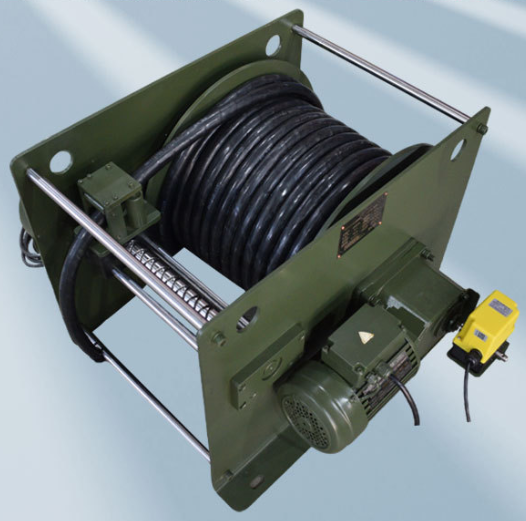
To address the specific operating conditions of underwater vehicle testing, we designed a dedicated cable winch system:
Slip Ring Integration Technology
Equipped with multi-channel precision slip ring relays, this is the key component for ensuring the composite cable rotates with the drum. It guarantees that the internal power lines, data cables, optical fibres, and pneumatic/hydraulic lines remain continuously connected whilst the drum rotates to wind or unwind the cable, thereby ensuring uninterrupted power supply and communication for the underwater equipment.
Automatic Cable Laying System
Utilising a precision lead screw guidance mechanism, this system guides the cable to lie neatly on the drum, completely eliminating tangling and knotting issues, thereby significantly extending the cable's service life.
Intelligent Monitoring System
Integrated with a high-precision odometer, it displays the length of cable deployed in real time, facilitating underwater positioning; equipped with a force sensor, it monitors cable tension in real time to prevent overloading during towing.
Four-Point Limit Control
Multiple position settings prevent the cable from being fully deployed or hitting the top limit, enhancing system automation and safety.
Right-Angle Shaft Motor Drive
Offering the advantages of a compact structure, high transmission efficiency, and low operating noise, it is suitable for precision deployment and retrieval operations.
IV. Key Technical Specifications
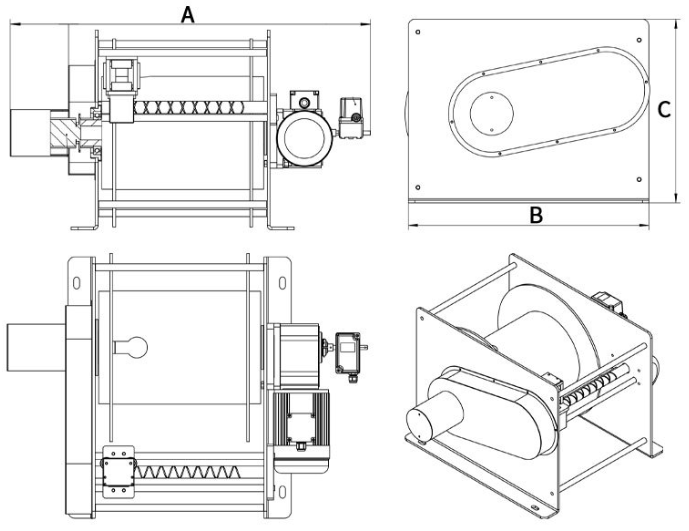
| Item | Specification |
|---|---|
| Rated Tensile Force | 50 kg |
| Suitable Cable Diameter | 35 mm |
| Cable Capacity | 32 m |
| Motor Power | 0.4 kW |
| Drum Rotation Speed | 6 rpm |
| Average Rope Speed | 5.9 m/min |
| Operating Voltage | 3P/380V/50Hz |
| Equipment Dimensions | 1034 mm × 750 mm × 573 mm |
V. Design Highlights
✔ Integrated slip ring structure: Multi-channel slip ring relays resolve the challenge of transmitting multiple signals and power whilst rotating.
✔ Automatic cable laying system: Precision lead screw guidance ensures each coil of cable is neatly arranged, extending cable lifespan.
✔ Intelligent monitoring and protection: Dual monitoring via an odometer and force sensor provides real-time operational data.
✔ Four-point limit control: Multi-position settings prevent over-winding or complete unwinding, ensuring operational safety.
✔ Right-angle shaft motor: Compact design, high transmission efficiency, and low operating noise.
VI. Application Scenarios
Towing operations for unmanned underwater vehicles (ROV/AUV)
Ground tethering tests for airships
Power supply systems for mobile robots
Deployment and recovery of underwater equipment
Underwater test platforms for research institutes
VII. Project Benefits
This solution achieves:
Enhanced equipment stability, ensuring continuous underwater operations
Improved operational efficiency, reducing labour costs associated with cable management
Reduced equipment risk, preventing loss caused by cable breakage or power failure
Extended cable lifespan, with neat cable routing minimising wear and tear
VIII. Customisation Enquiries
Company: Beijing Tianheng Kairui Industrial Equipment Co., Ltd. (KLD Winch)
Website: https://kldwinch.com
Customisation Services: We provide one-to-one technical solutions and bespoke quotations; please feel free to discuss your specific requirements.
IX. FAQ
Q1: Can the winch be customised?
A1: Yes. We can provide fully customised designs based on cable type, length, pulling force requirements, and the number of channels.
Q2: What is the maximum pulling force achievable?
A2: This case study features a 50 kg model; we can provide solutions ranging from 50 kg to several tonnes to meet the requirements of equipment of varying scales.
Q3: Is variable frequency speed control supported?
A3: Yes. A variable frequency control system can be selected according to operational requirements to achieve stepless speed regulation, meeting different winding and unwinding speed requirements.
Q4: In which environments is the equipment suitable for use?
A4: This equipment is suitable for scenarios such as underwater testing, airship mooring, and robot power supply. An optional protection rating can be added to ensure it can be used in harsh environments such as outdoors, in damp conditions, or in salt spray.
Q5: Does KLD provide technical support?
A5: Yes, we provide full-process technical support ranging from requirements consultation, solution design, and equipment customisation to on-site commissioning and after-sales maintenance.