



 Linkedin
 Google +
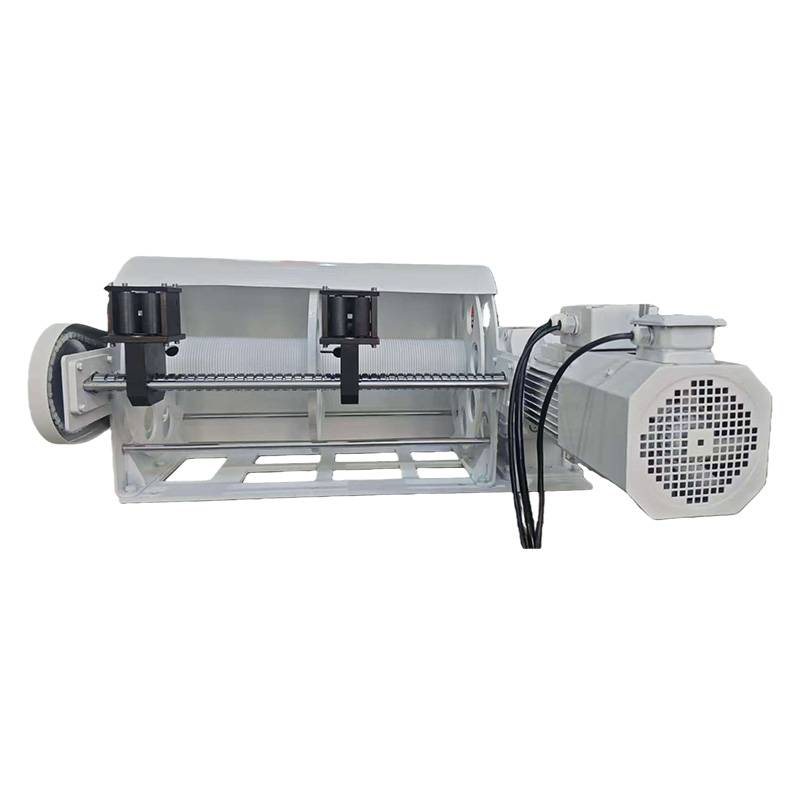
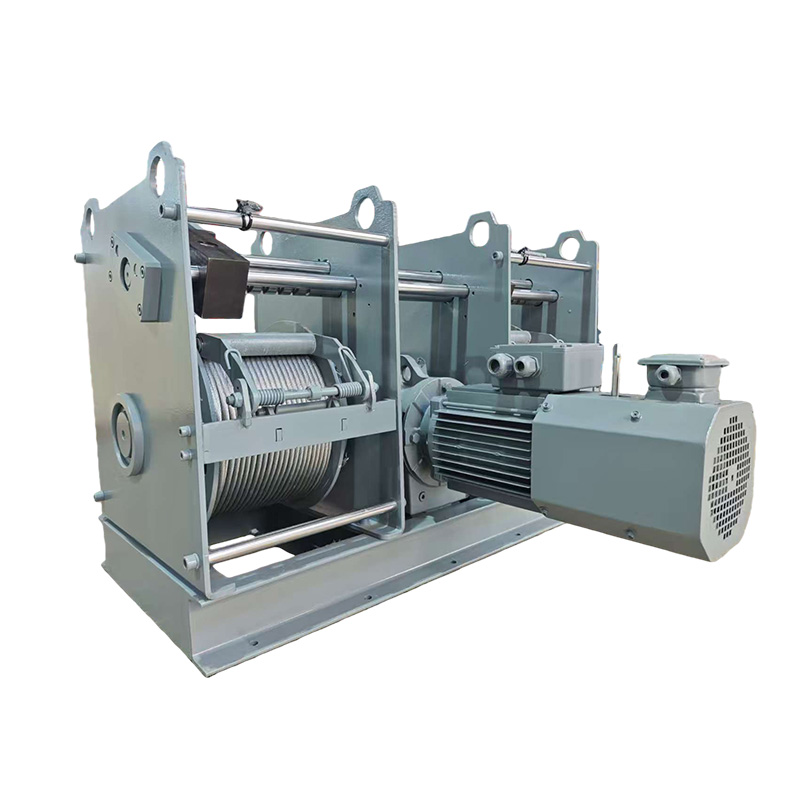
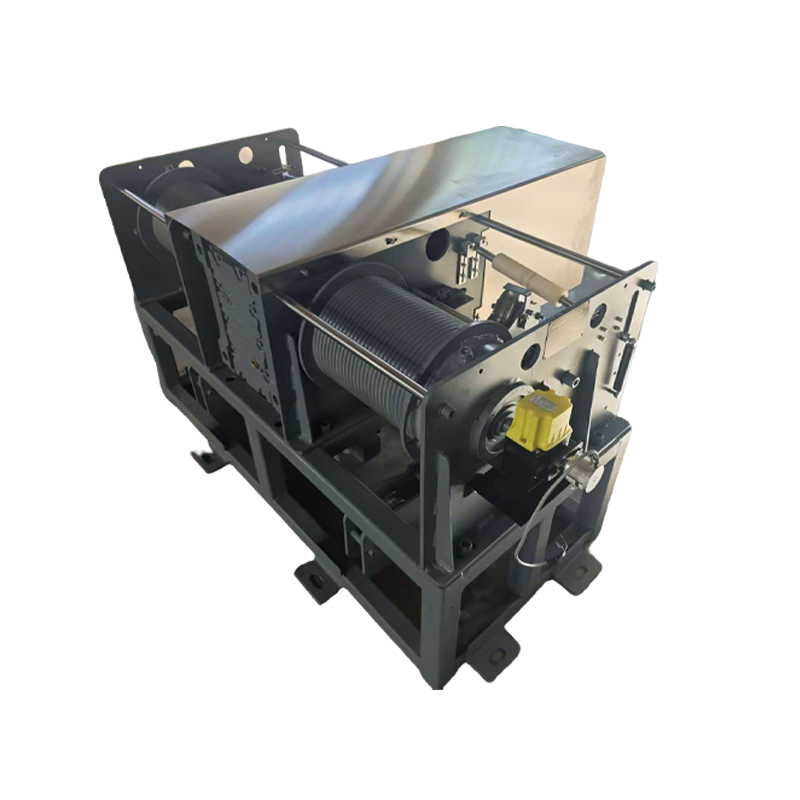
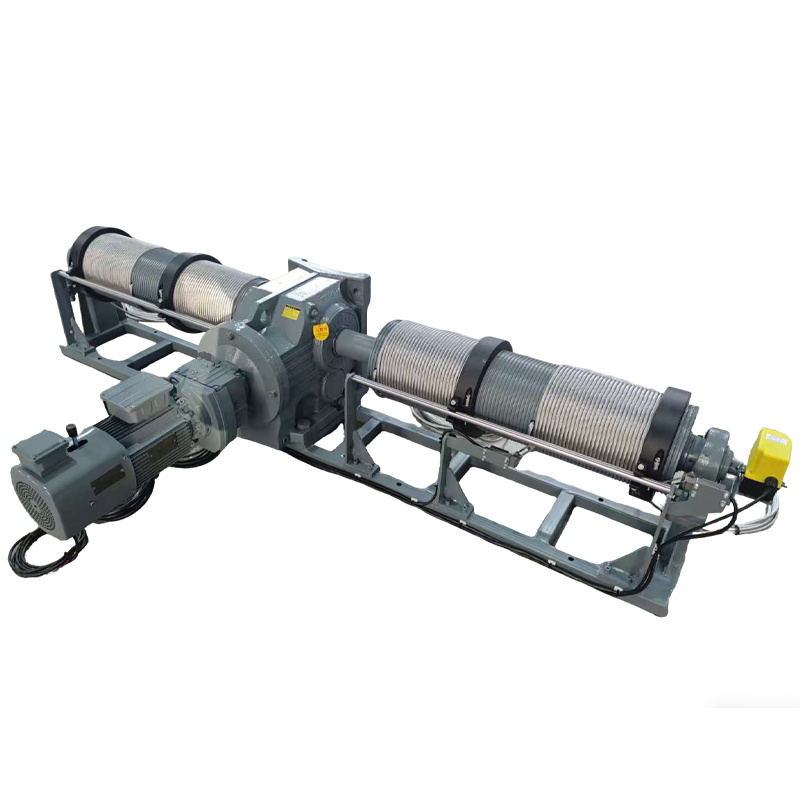
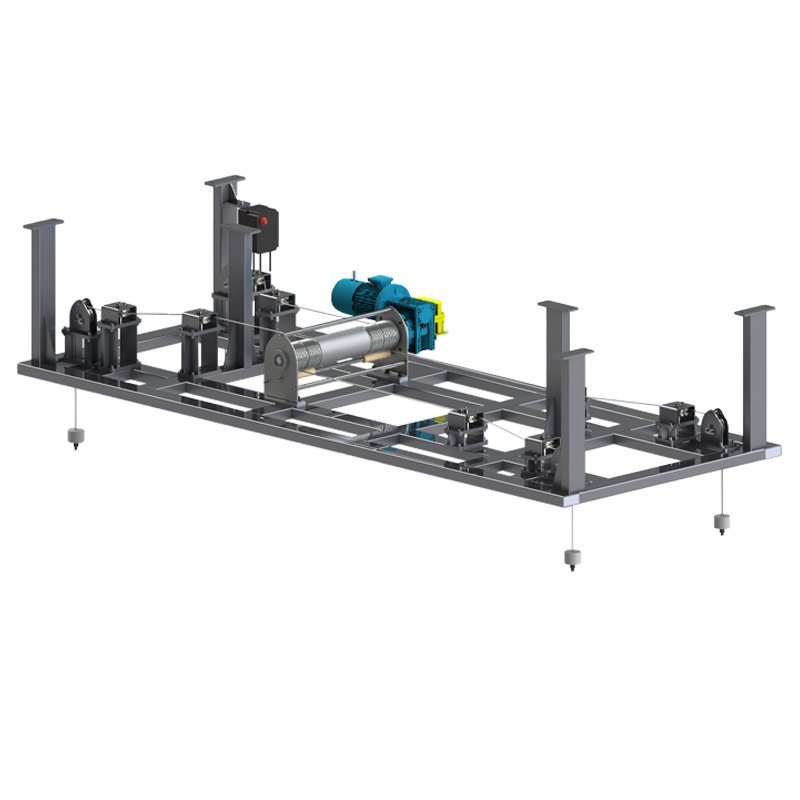
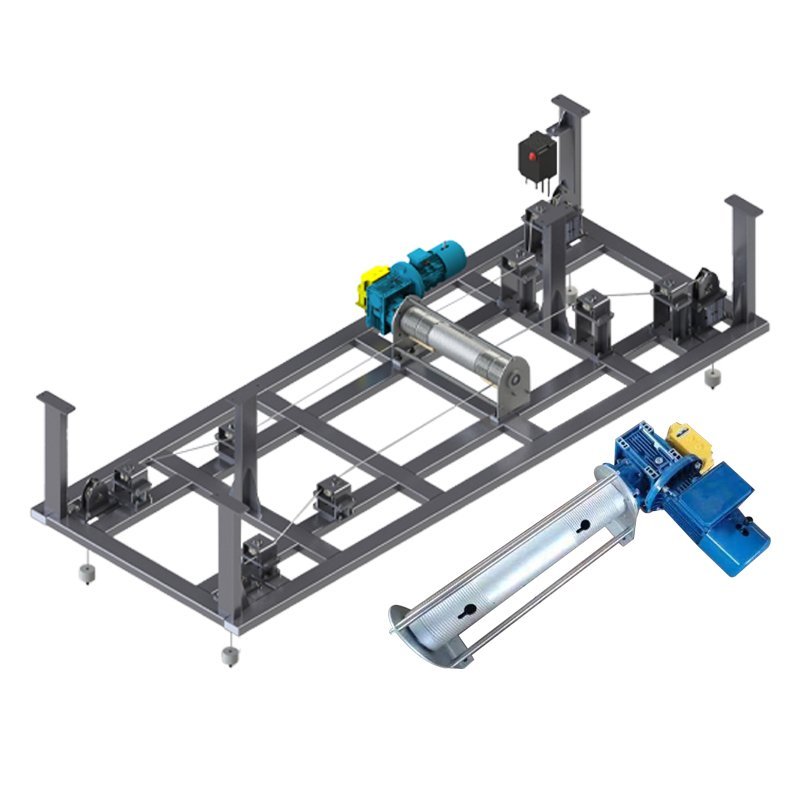
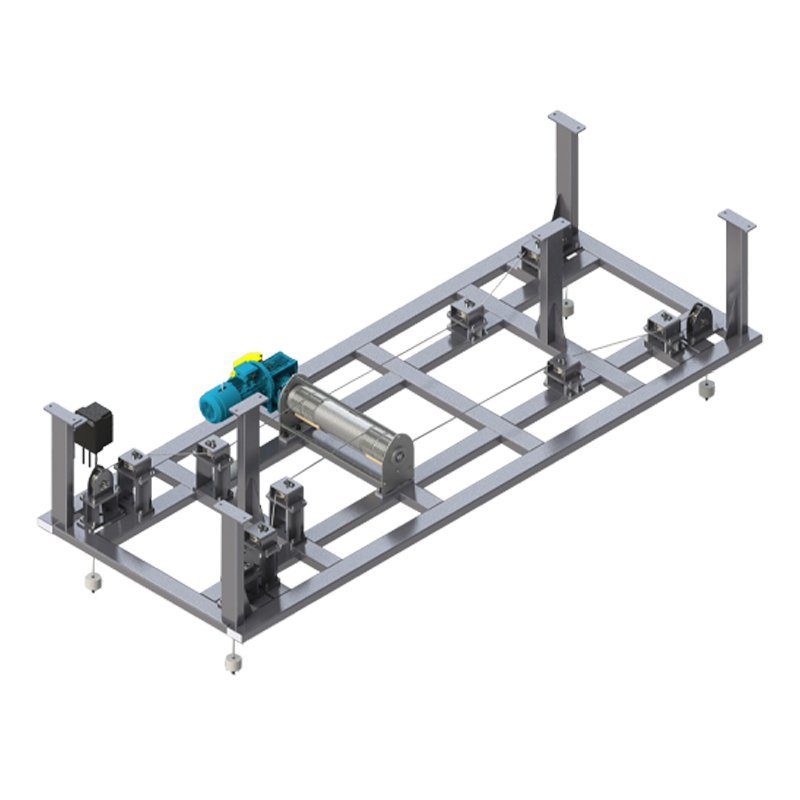
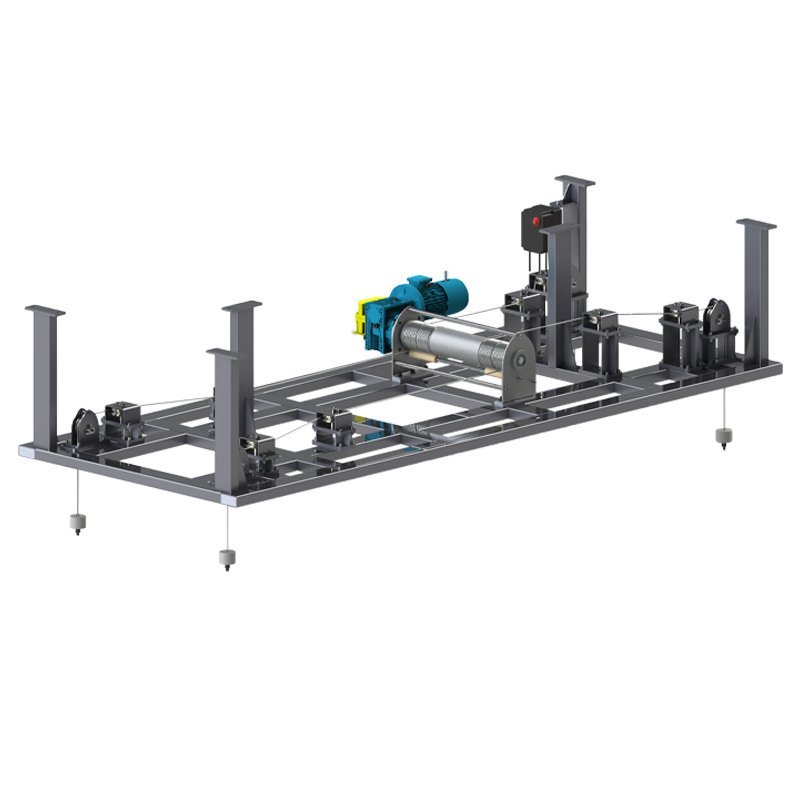
Four rope synchronous lifting winch driven by a single gear motor, using pulleys to redirect the ropes so all four ropes pay out in step. Case model 300KG: 1.5 kW motor, lifting height 5 m, lifting speed 2 m/min; frame outline 3300 × 1300 × 650 mm. Low running noise, with 8 horizontal and 4 vertical pulleys plus four corner weight blocks and four pressed rope terminations. Suited to lifting a table top or large components.
Four Rope Synchronous Lifting Winch 300kg Frame Mounted | KLD
-
A four rope synchronous lifting winch driven by a single gear motor. Pulleys redirect the rope run so all four ropes pay out in step, giving balanced rope forces during lifting. Suited to lifting a table top or large components. Low running noise thanks to selected materials and precise manufacturing.
Quick Specs
Model: 300KG  |  Lifting weight: 300 KG  |  Motor power: 1.5 kW
Lifting height: 5 m  |  Lifting speed: 2 m/min
Outline (A × B × C): 3300 × 1300 × 650 mm
Application Scenarios and Applicable Boundaries
- Raising and lowering a table top — the case device is a table-top lifting assembly installed in a room, with the winch above and the table lowered to the floor or raised to the ceiling beam.
- Lifting large components — the frame carries four ropes routed by pulleys, so large and long work pieces can be lifted from four points.
- Installations where the rope exit direction must be changed — pulleys redirect the rope run, so the rope route can follow the structure.
- Four-point lifting where the load must stay level — four ropes running in step distribute the load over four points.
- Applications needing low running noise — selected materials and precise manufacturing reduce running noise for a more comfortable working environment.

Boundary: the case model is 300 KG with a 1.5 kW motor, lifting height 5 m and lifting speed 2 m/min; frame outline 3300 × 1300 × 650 mm. This is a non-standard product; load, speed, rope length, control mode, mounting, rope exit direction and material are customized to the site. Protection, durability and safety design are also developed per application. Confirm the load, lifting height, rope route, supply and mounting interface before ordering.
Features Benefits
One motor, four ropes — a single gear motor drives the drum, providing stable power output so the lifting and lowering sequence runs smoothly.
Balanced four-point lifting — four ropes run in step so the rope forces stay balanced during lifting, which supports stability and safety of the lift.
Rope route follows your structure — pulleys redirect the rope run so the four ropes can be laid out to match the frame and the lifting points.
Quieter operation — selected materials and precise manufacturing help lower running noise for a more comfortable working environment.Complete Technical Specifications

Model:300 KG Motor power:1.5 KW Rope out speed:5m/min Lifting height:5m Lifting speed:2m/min Model:300 KG A(Length):3300mm B(Width):1300mm C(Height):650mm Size Installation and System Interface
Outline (case 300kg): 3300 × 1300 × 650 mm (A length × B width × C height).
Frame: frame assembly (TH2386.01) carries the winch assembly (TH2386.02) and the pulley assemblies; four corner lifting bolts are provided on the frame for handling.
Mounting: the case installation is in a room, with the frame above and the table lowered to the floor or raised to the ceiling beam (per drawing TH2385.00). Expansion bolts M12x130 (12 off), hex socket screws M12x25 (6 off), flat washers 12 (6 off), spring washers 12 (6 off) and nuts M12 (8 off) are listed in the assembly BOM. Confirm the hole pattern and the structural interface on the approved drawing.
Rope interface: four ropes; 8 horizontal pulley assemblies and 4 vertical pulley assemblies on their bases guide the ropes; 4 pressed rope terminations connect the ropes to the load.
Counterweight: 4 weight blocks are part of the assembly for rope take-up / balance of the four rope runs.
Rope termination: per the drawing note, the rope and the pressed rope termination are crimped together with a hydraulic tool.
Drive: single gear motor 1.5 kW, case model.
Control Safety and Protection
- Drive: single gear motor drives the drum; four ropes pay out in step.
- Rope guiding: 8 horizontal pulley assemblies and 4 vertical pulley assemblies, held on pulley bases, guide the ropes from drum to the lifting points; pulleys also change the rope exit direction.
- Rope terminations: 4 pressed rope terminations, crimped to the ropes with a hydraulic tool.
- Counterweight: 4 weight blocks in the frame assembly keep the rope runs tensioned / balanced.
- Handling: four corner lifting bolts on the frame allow the assembly to be lifted as one unit.
- Optional: drum divider flange, manual emergency crank, VFD control panel, pulley, encoder with main-shaft limit switch, pendant remote control, limit switch, rope follower, winding device, grooved drum, slack-rope switch, slip ring, class certificates (LRS / BV / ABS / DNV GL).
- Personnel lifting excluded unless a dedicated man-rated system is specified.
Customization Options and Engineering Process
Configured around your operating conditions — Share the required line pull, rope length, operating speed, duty cycle, power supply, installation envelope and environment. KLD will review the application and provide a proposed configuration, technical drawing and quotation for approval. Free design schematics are provided for different scenarios.
Requirements → Concept → Drawing & Quotation → Approval → Production & Test → Delivery
Standards Testing and Quality
The company operates an ISO 9001 quality management system. CE conformity documents (LVD, EMC) are available for applicable configurations on request.

Factory testing follows the approved technical specification for each configured unit and may include: no-load run, rated-load operation, brake holding function and control verification. Available documentation may include dimensional drawings, electrical diagrams, inspection records and functional test results, depending on project scope.
Engineering Cases
a four rope synchronous lifting winch required for raising and lowering a large table top inside a room. The device is installed in the room with the winch frame above; the table is lowered to the floor when stowed and raised toward the ceiling beam when in use. The project needed four ropes running in step from a single drive, a pulley layout that would follow the structure and change the rope exit direction, and low running noise in the room.

Solution: four rope synchronous lifting winch, case model 300KG — single gear motor 1.5 kW; lifting height 5 m and lifting speed 2 m/min; frame outline 3300 × 1300 × 650 mm. The assembly comprises a frame assembly (TH2386.01), a winch assembly (TH2386.02), 8 horizontal pulley assemblies (TH2386.03), 4 vertical pulley assemblies (TH2386.04), pulley bases (TH2386.05 / TH2386.06 / TH2386.07), 4 weight blocks (TH2386.00.00.01) and 4 pressed rope terminations (TH2386.00.00.02). Pulleys redirect the rope run so all four ropes pay out in step.

Outcome: the device met the project's lifting weight, four-rope synchronization, rope routing and noise requirements, and passed the customer's acceptance procedure.
Technical Data Download
Request technical documents for the configuration shown. Share your required line pull or lifting load, rope travel and operating speed so KLD can confirm which datasheets, drawings or manuals are available.Delivery Packaging and Lifecycle Support
Most winches are custom-made products; lead time is confirmed after technical approval and order review. Project support can include configuration review, drawing approval, factory testing, export packaging, remote commissioning support and recommended spare parts. On-site measurement and installation support are available for applicable projects. -
-
What is the case specification?
Model 300KG with a 1.5 kW motor, lifting height 5 m and lifting speed 2 m/min; frame outline 3300 × 1300 × 650 mm (A × B × C).
-
How is the four rope synchronization achieved?
One gear motor drives the drum; the four ropes are carried on the drum and routed by 8 horizontal pulley assemblies and 4 vertical pulley assemblies, so all four ropes pay out in step and the rope forces stay balanced.
-
Can the rope exit direction be changed?
Yes. Pulleys are used to redirect the rope run, so the rope route can be laid out to follow the frame and the lifting points.
-
get a quote
Related products
-

Dual Rope Synchronous Electric Winch
-
Dual Drum Synchronous Electric Winch
-
Dual Rope Synchronous Electric Winch for Curtain Wall Hoisting
-
Dual Drum Electric Winch for Large Chandelier Lifting
-
Explosion-Proof Umbilical Winch for Coal Mine Operations
-
Heavy Duty High Efficiency Double Drum Winch
-
Servo Double Drum Winch 2 Ton Motor 5kW | KLD
-
3000kg Twin Rope Synchronous Winch 10m/min | K Series | KLD