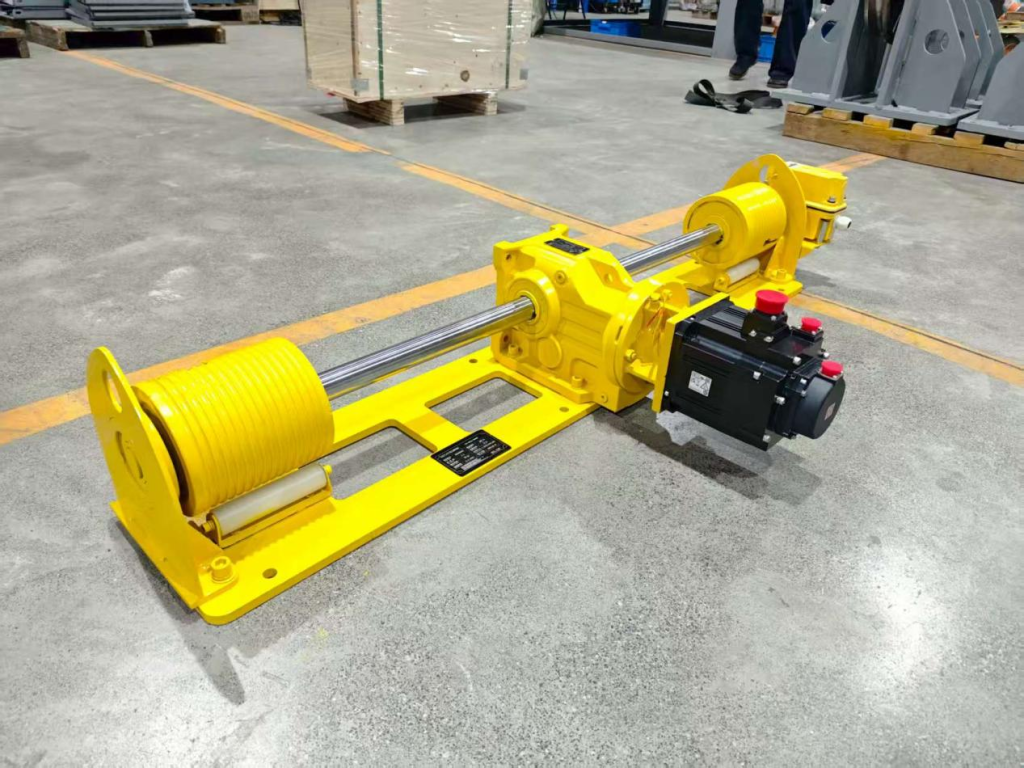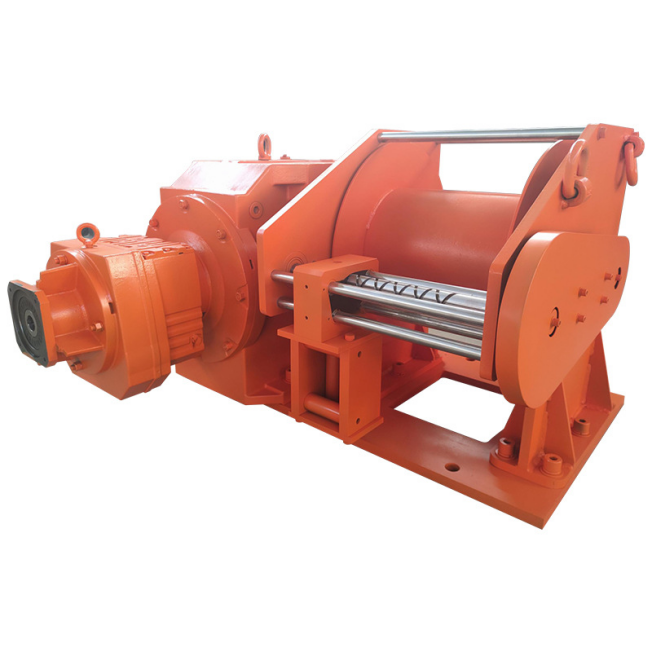


Project Overview:Marine Environment Detection
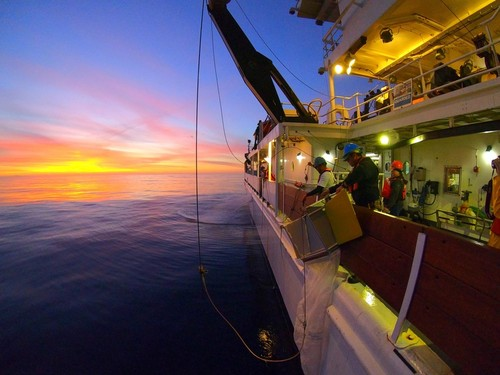
In marine environments,many detection devices must be installed on ship decks or offshore platforms for extended periods,with cables frequently deployed and retrieved.
Due to long-term exposure to moisture,salt spray,rain,and sea wind,standard industrial winches often fail to meet the requirements for stable,long-term operation in such conditions.
For this project,the customer required a complete data handling and winch system for their marine detection application,with a clear focus on:
Environmental protection and reliable data transmission.
The system is primarily used for:
Marine environment monitoring
Hydrological equipment deployment
Shipboard detection systems
Marine data collection
Therefore,the customer’s concern goes beyond basic winch performance—it centers on:
Marine environmental adaptability.
I.Project Requirements Analysis
The customer’s core requirements include:
1.Long-term Marine Environment Operation
The equipment must be installed on a ship deck and withstand:
Sea wind
Salt spray
High humidity
Rainwater
Continuous outdoor exposure
Standard winches in such environments typically suffer from:
Corrosion of external structures
Electrical component dampness
Water accumulation
Reduced service life
Therefore,improving overall environmental protection is a key priority.
2.Controlled Deployment of Detection Equipment
The system is primarily used for deploying and retrieving marine detection equipment,and must support:
Controlled cable payout length
Stable data transmission
Integration with control systems
Reliable long-term cyclic operation
3.Deck Water Accumulation
Installed on ship decks where standing water is common,the system must offer:
Improved drainage and water-resistant base design.
II.Why Standard Winches Struggle in Marine Environments
Most industrial winches are designed for:
Factories
Workshops
Indoor environments
Marine environments impose much stricter demands on construction.
Common issues with standard winches include:
1.Salt Spray Corrosion
Salt spray in marine environments continuously corrodes equipment surfaces.Carbon steel structures are prone to:
Rust formation
Paint peeling
Fastener corrosion
This affects long-term operational stability.
2.Moisture and Rain Exposure
Ship decks are directly exposed to:
Sea wind
Rain
High humidity
Standard winches often experience:
Electrical dampness
Control system failure
Premature cable aging
3.Water Accumulation
Deck areas frequently accumulate water from rain or wash-down.Standard bases offer limited drainage,and prolonged exposure to standing water affects reliability.
4.Data Transmission Requirements
Marine detection equipment typically requires real-time data backhaul,meaning the winch system must do more than just handle cables—it must also support stable data transmission.
III.KLD Marine Environmental Protection Solution
In response to these challenges,KLD has optimized the entire structural design.
The solution focuses specifically on:
Marine environmental adaptability.
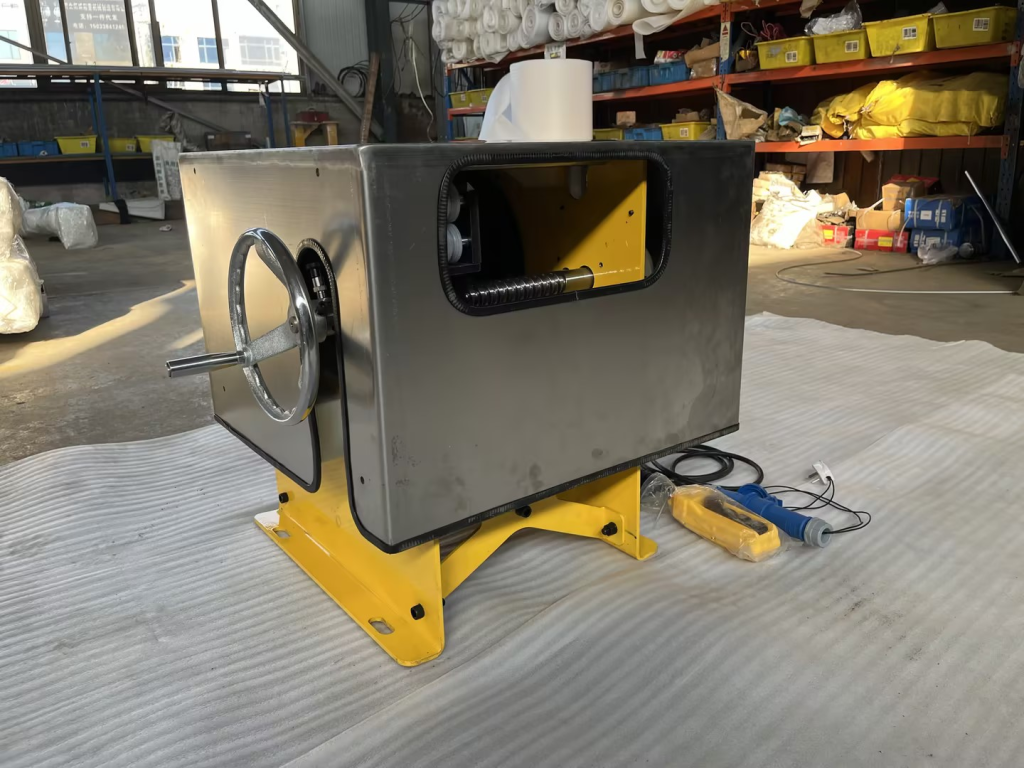
IV.Stainless Steel Protective Enclosure
To enhance corrosion resistance,the system features a stainless steel protective cover,which provides:
Reduced impact from sea wind
Minimized rain intrusion
Improved corrosion resistance
Long-term operational stability
The structure is specifically designed for long-term outdoor ship deck applications.
V.Base Drainage Design
Given the potential for standing water on ship decks,the base structure has been optimized with:
A dedicated drainage design,which reduces the impact of water accumulation on system operation and improves stability in wet conditions.
VI.Waterproof Metering System
For accurate control of detection equipment deployment,the system includes a waterproof length counter that enables:
Cable payout length control
Synchronized deployment/retrieval recording
Control system integration
This improves operational efficiency for marine detection tasks.
VII.Slip Ring Data Transmission System
Because the customer’s equipment requires real-time data backhaul,the system is equipped with a slip ring data transmission structure.
During cable deployment and retrieval,it ensures:
Stable signal transmission
Synchronous data backhaul
Reliable recording of detection information
This makes the system particularly suitable for marine environment detection applications.
VIII.Applicable Scenarios
This system is suitable for:
Marine environment monitoring
Shipboard detection systems
Hydrological equipment
Marine data collection
Offshore platform operations
Ship deck equipment
IX.Reference Project Parameters
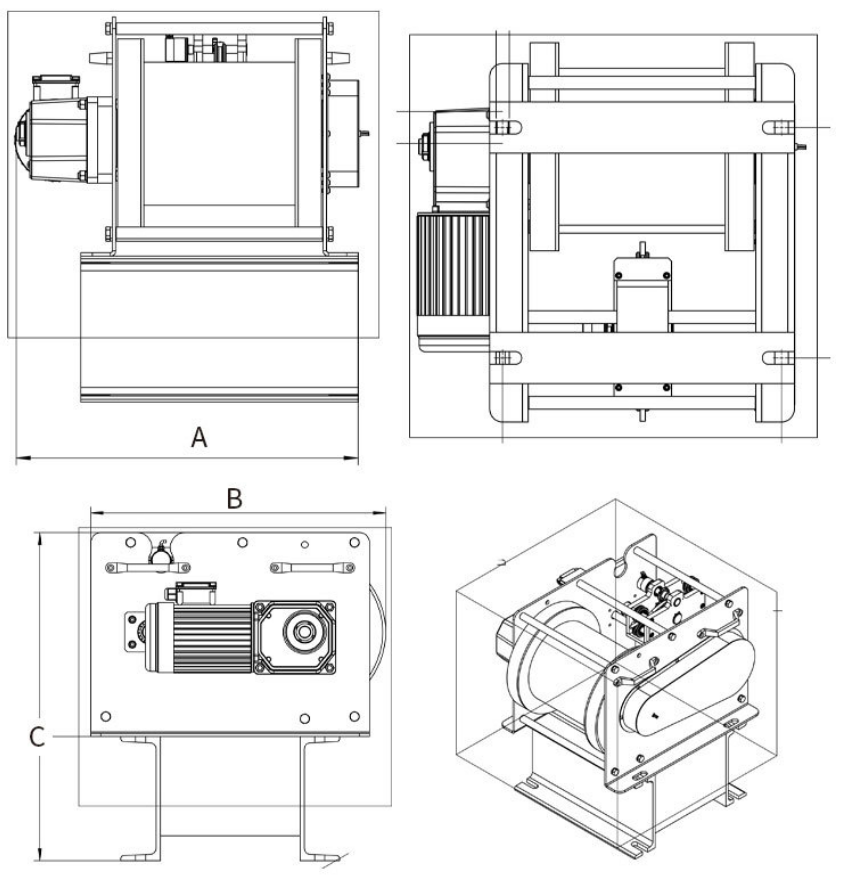
| Parameter | Value |
| Rated Pull | 200 kg |
| Cable Diameter | 8 mm |
| Cable Length | 110 m |
| Motor Power | 0.4 kW |
| Average Line Speed | 10.44 m/min |
X.Non-Standard Customization Supported
Because every ship and marine detection application has unique requirements,KLD supports:
Non-standard customized design.
Customizable parameters include:
Cable length
Pull force
Protection rating
Control method
Data transmission structure
Installation space
Voltage system
Classification society requirements
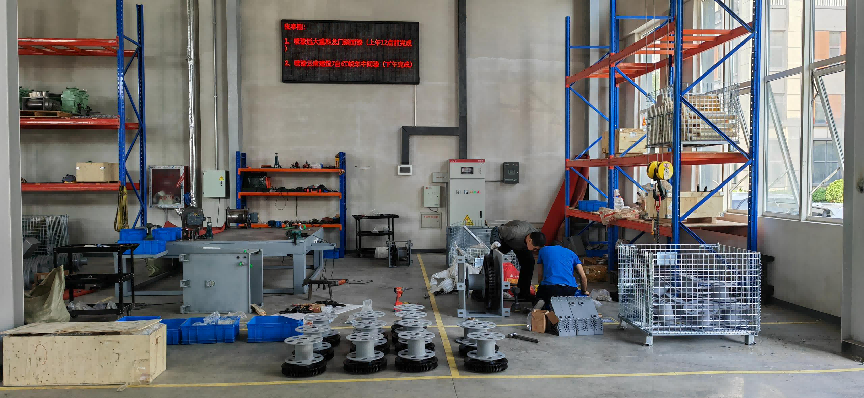
XI.KLD:More Than a Winch Manufacturer
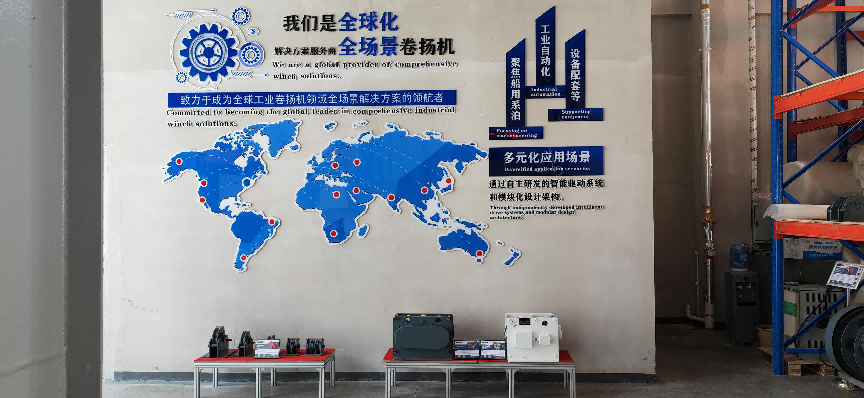
We provide engineering solutions for marine environments.
For any marine winch system,the key differentiator is not simply the winch itself—but a genuine understanding of the operating conditions.
KLD offers the following depending on project needs:
Solution analysis
Structural optimization
Engineering drawings
Control system integration
Engineering support
Our goal is to help customers improve long-term operational stability in complex marine environments.
XII.FAQ–KLD Marine Environment Detection Winch System
Q1:Can this system really hold up long-term on a ship deck without rusting?
A:Yes.The system is specifically designed for marine environments.It includes a stainless steel protective cover and corrosion-resistant structural components.This is not a standard industrial winch with basic paint—it is built from the ground up for salt spray,moisture,and outdoor marine exposure.
Q2:Will standing water on deck damage the system?
A:No.The base incorporates a dedicated drainage design that prevents water from accumulating around critical components.This is an engineered feature,not simply a drain hole.
Q3:How accurate is the cable length control?
A:The system is equipped with a waterproof length counter that provides precise control over cable payout length,with synchronized recording.It can be integrated with a control station for repeatable,accurate deployment and retrieval.
Q4:Is data transmission stable during operation?
A:Yes.The system uses a slip ring data transmission structure,which ensures stable signal transfer even during continuous deployment and retrieval.No intermittent signal loss or disconnection issues.
Q5:Are the parameters fixed,or can the system be customized?
A:Fully customizable.KLD supports non-standard design.Cable length,pull force,protection rating,control method,data transmission,mounting space,voltage,and classification society requirements(CCS,ABS,DNV,etc.)can all be tailored to the specific project.