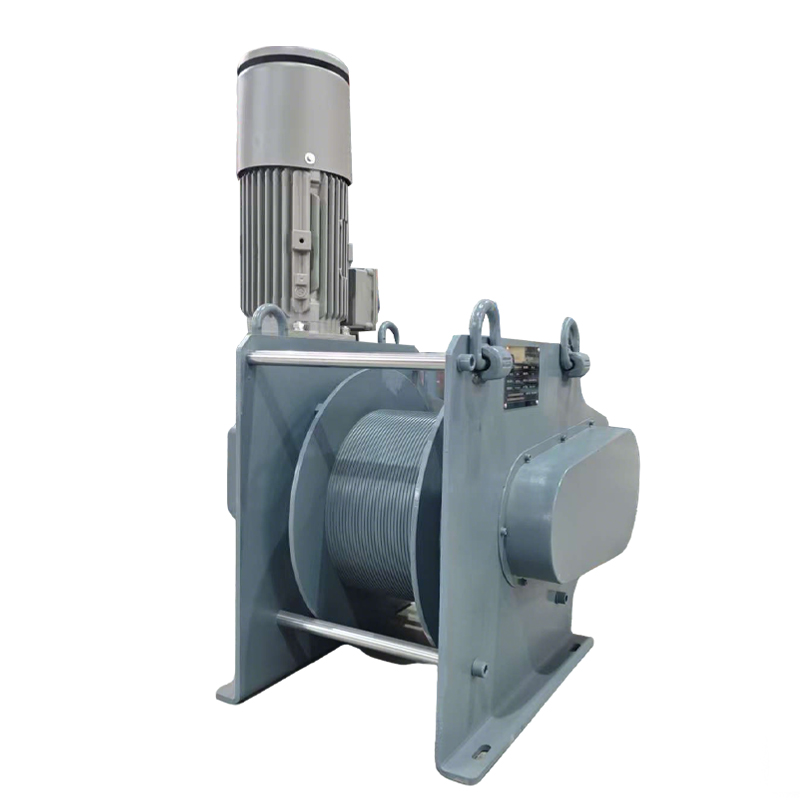
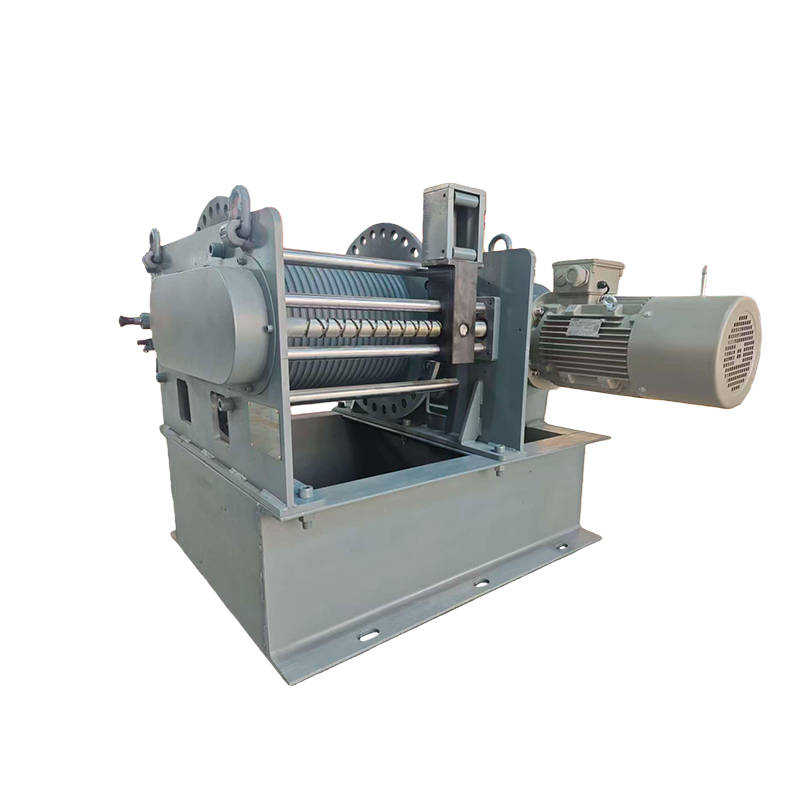
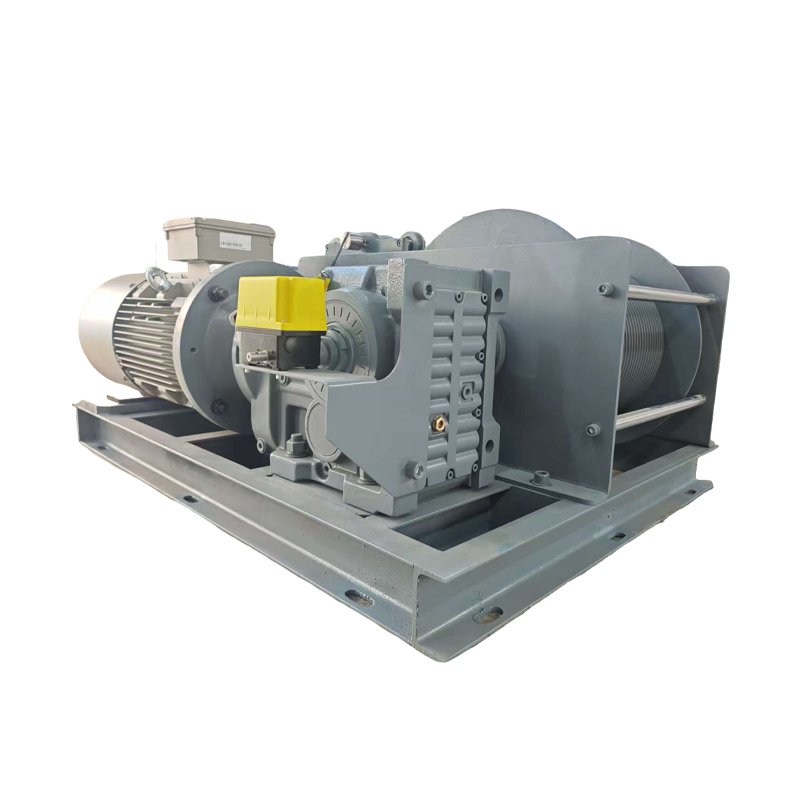
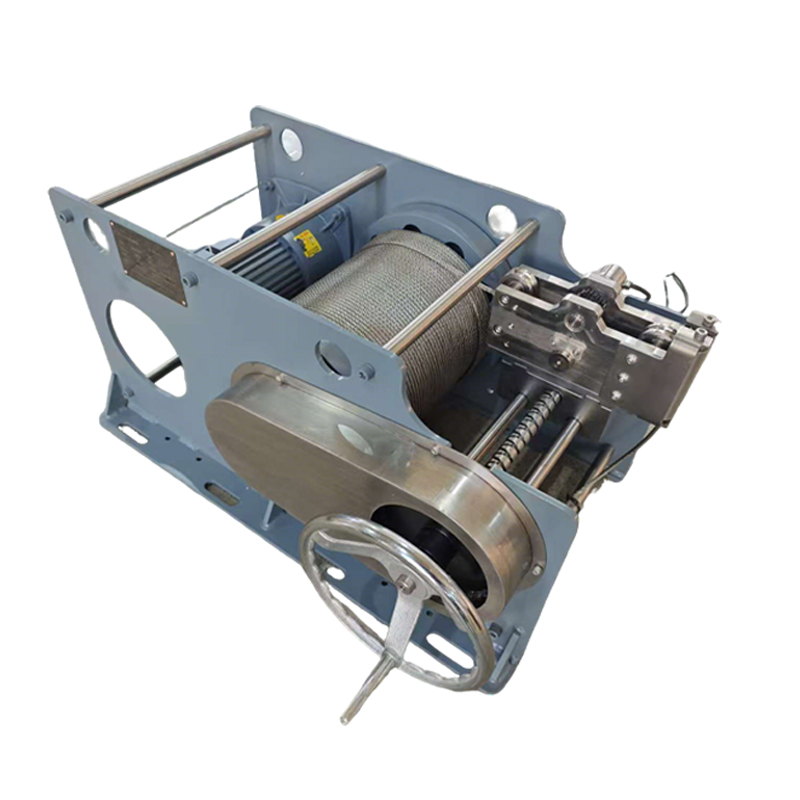
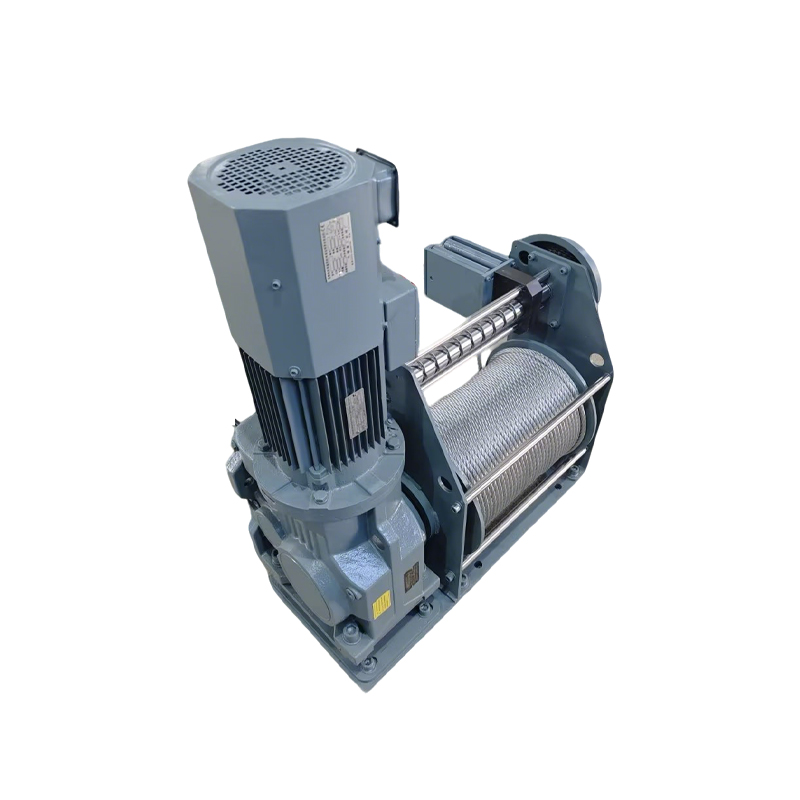
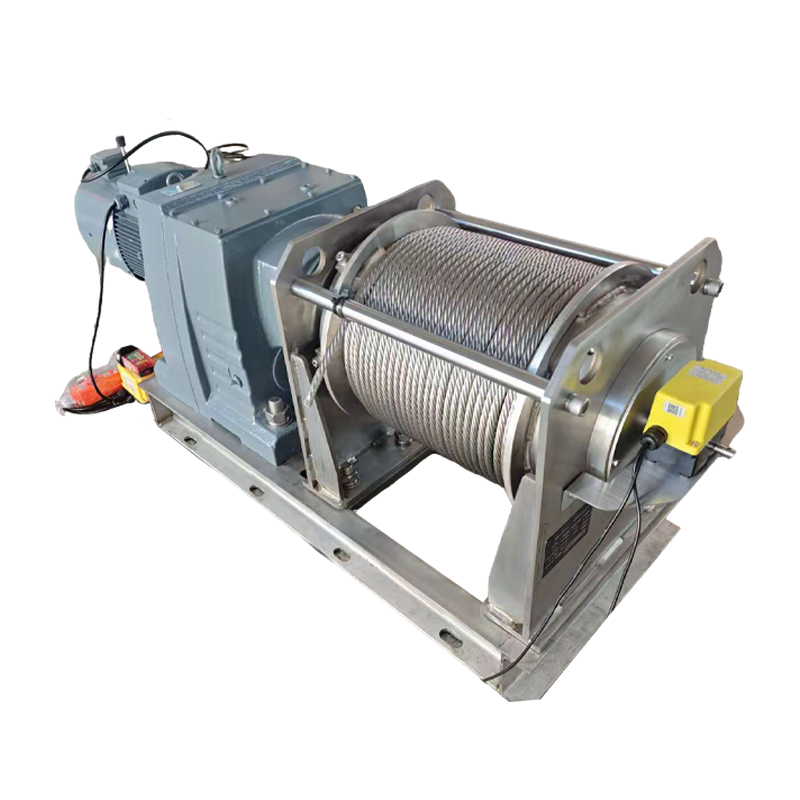
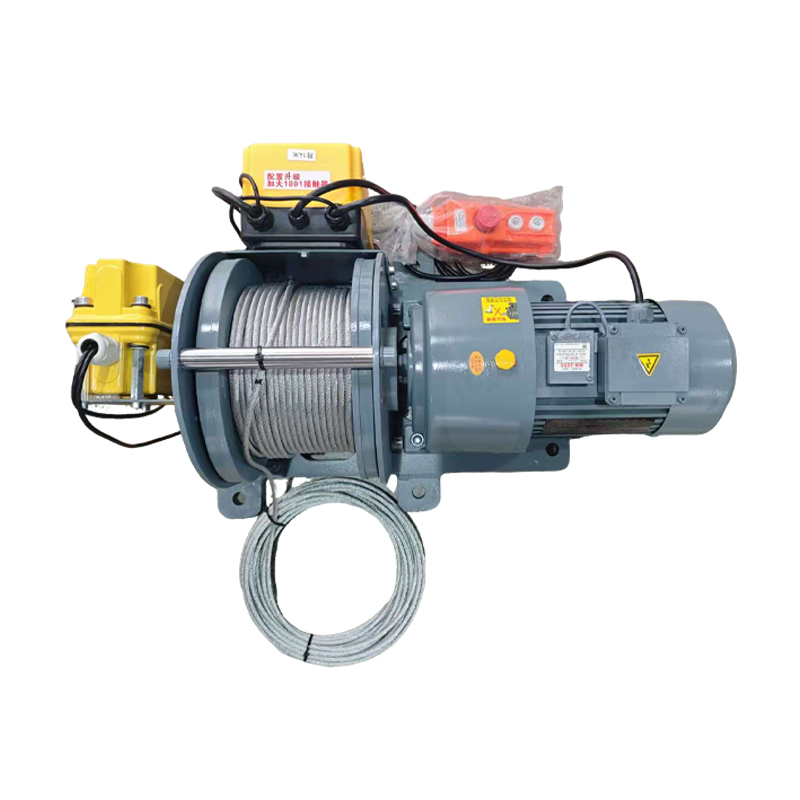
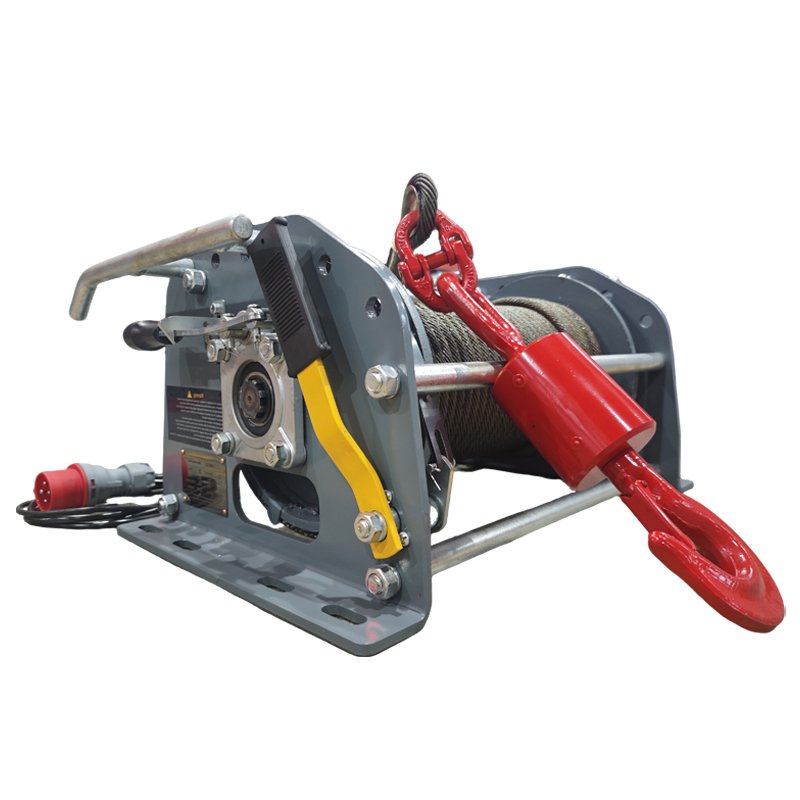
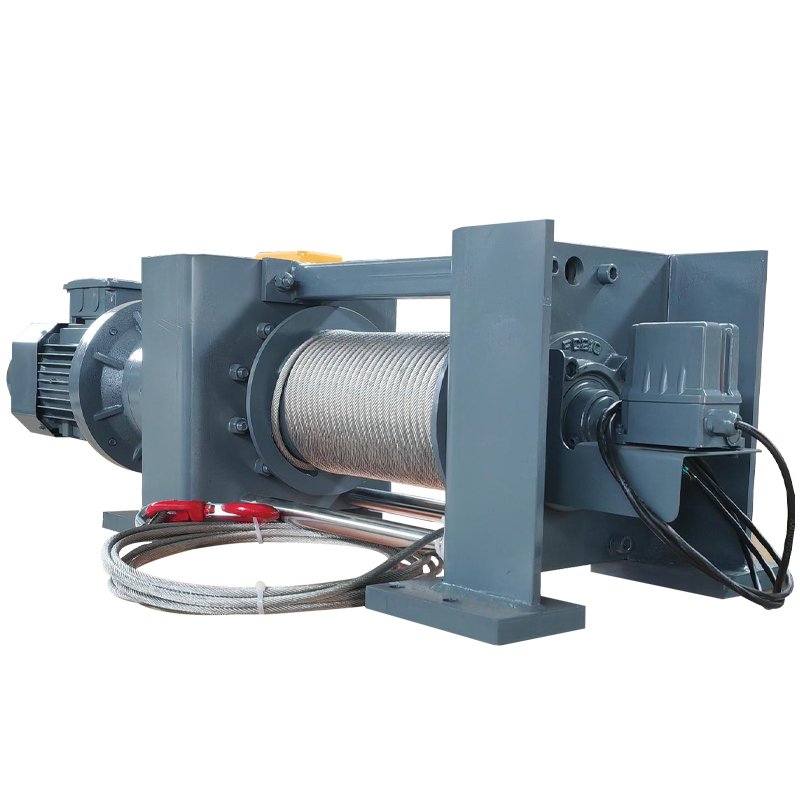
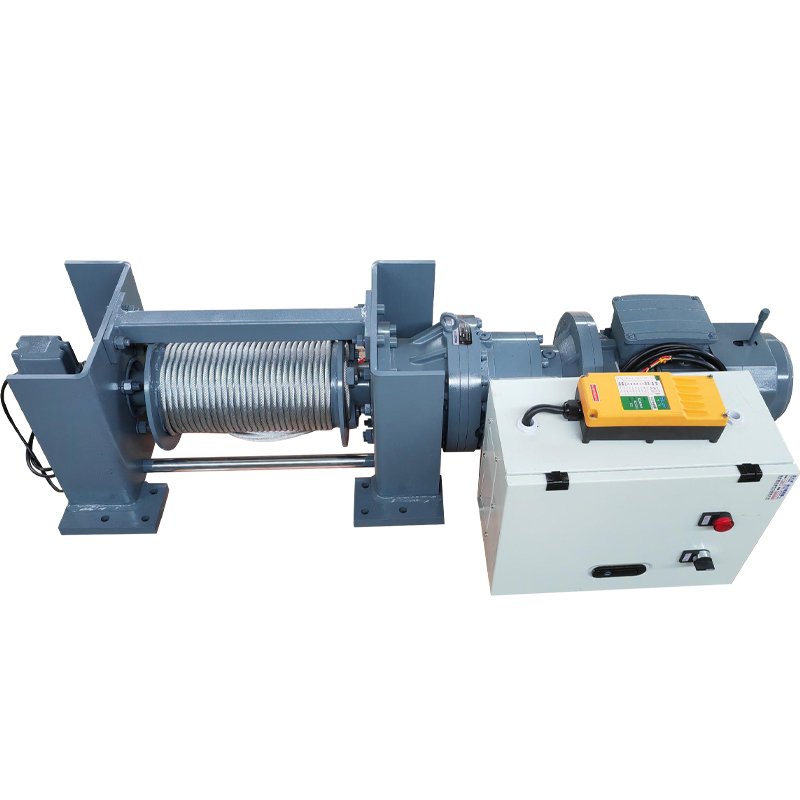
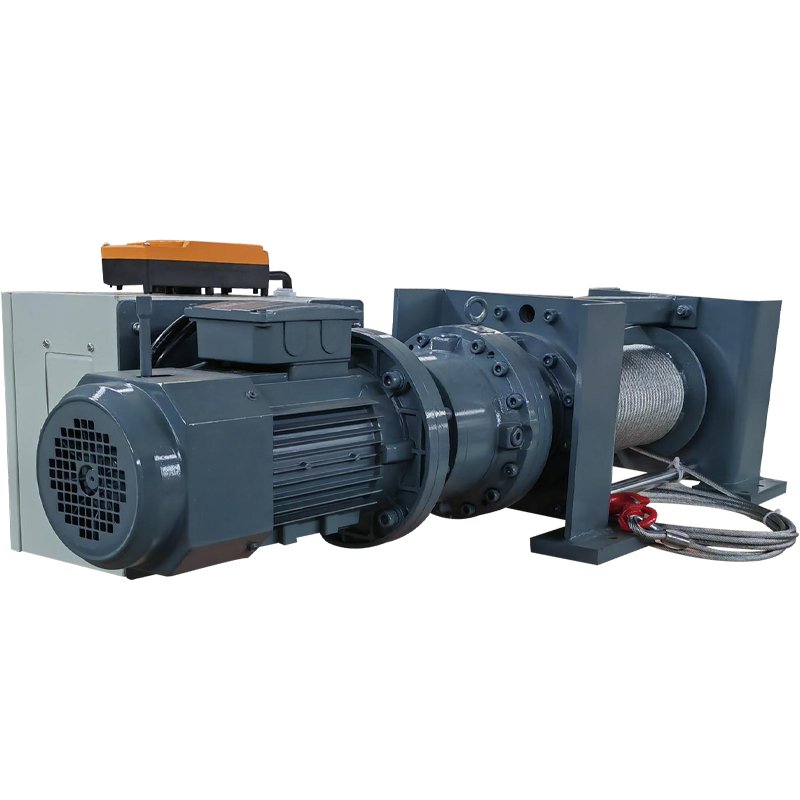
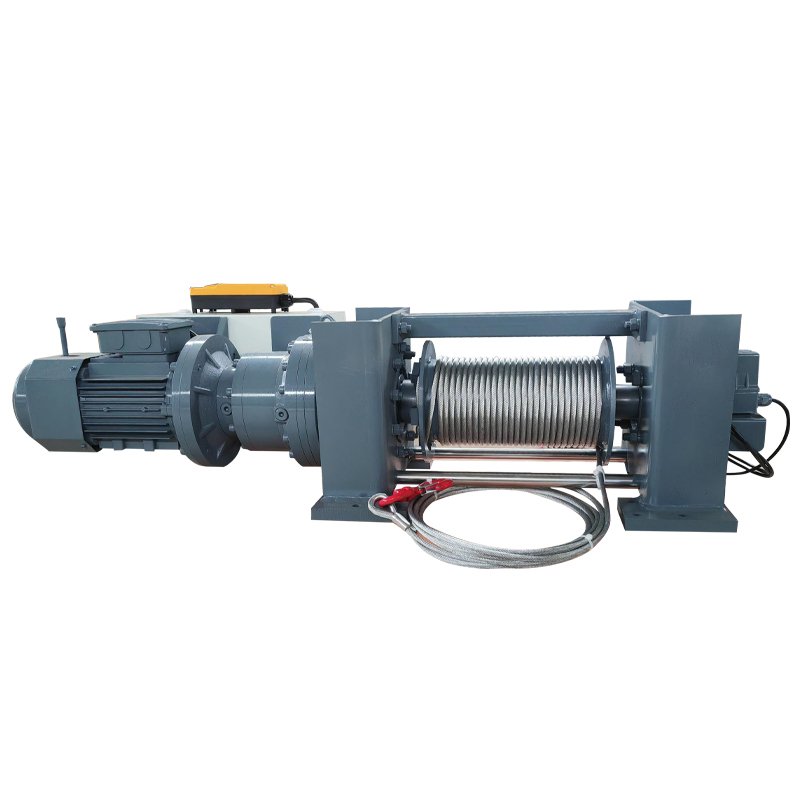
This linear industrial winch is equipped with an efficient planetary gearbox and an electromagnetic brake motor, enhancing both operational efficiency and safety. Its linear design not only saves space but also improves aesthetics, making it suitable for a variety of industrial applications.
Electromagnetic brake motor ensure safe and reliable operation to prevent accidental sliding.
Planetary gearbox provides smooth and quiet operation, enhancing the comfort of the working environment.
Turbine-type limit switch by flexibly setting the upper and lower limit positions, the working range of the winch can be precisely controlled, reducing the risk of accidents.
Linear design layout compact structure, optimized space utilization and aesthetics.
Integrated design of electric control and motor simplified controls for user-friendly operation.
The electromagnetic brake can be manually released the steel wire rope can be manually released, enhancing operational flexibility.
A 1000 kg industrial winch built on one axis: planetary reducer, electromagnetic braked motor and drum in line, with the control box integrated on the motor side. The 2.2 kW three-phase 380V motor drives through a 124:1 reduction for an average rope speed of 5 m/min on Ø8 mm rope. The grooved drum spools in multiple layers, so 20 m of rope fits on a single drum. A turbine-type limit device sets the upper and lower travel positions, the brake can be released by hand, and the whole unit measures 1342 × 533 × 331 mm on sixteen Ø13 mm mounting holes.
Quick Specs
Model: PJI-1000-00-00
Rated pull: 1000 KG
Steel wire rope: Ø8 mm
Rope length: 20 m
Motor: 2.2 kW, three-phase 380V / 50 Hz
Application Scenarios and Applicable Boundaries
- General workshop lifting and pulling where three-phase 380V is available
- Door, gate and hatch operation on industrial buildings
- Pulling, tensioning and positioning duties on frames and rigs
- Wall or floor mounted hoisting points on light steel structures
- Applications needing a set upper and lower travel limit rather than an operator judgement
- Installations where the control panel has to sit next to the machine, not in a separate cabinet room
Features Benefits
A planetary reducer sits between the motor and the drum. A planetary stage shares the load across several planet gears, so a compact housing carries a high reduction without a long gear train. The case reduction is 124:1, giving an average rope speed of 5 m/min at the drum. The motor is a three-phase 380V / 50 Hz unit rated 2.2 kW, fitted with an electromagnetic brake on the non-drive end. Three-phase supply gives a higher starting torque per frame size than a single-phase motor, which suits a 1000 kg pull. The brake applies when the motor is de-energised. A turbine-type limit device is fitted as standard on this model. It is geared to the drum shaft, so the trip points follow the drum rotation rather than a timer. The upper and lower positions are set mechanically on the device, which means the machine stops itself at the set positions without an operator watching the load.
Complete Technical Specifications
Model:1000 KG
Motor power:2.2KW
Rated pulling force:1000kg
Steel wire ropediameter:8mm
Steel wire ropelength:20m
Average ropespeed:5m/min
Rated voltage:3P/380V/50HZ
Model:1000 KG
A(Length):1342mm
B(Width):533mm
C(Height):331mm
Size Installation and System Interface
A (length, along the drum axis): 1342 mm  (drawing: 1341.50)
B (width, across the machine): 533 mm
C (height): 331 mm  (drawing: 330.50)
Mounting holes: 16 × Ø13 mm, across two base plates
Base plate width: 350 mm / 230 mm; hole edge distance 67 mm; span 372 mm; end-view mid-section width 390 mm
Footprint ratio: length to width about 2.5:1 — the machine mounts along a wall, beam or platform edge.
Control Safety and Protection
Drive: 2.2 kW three-phase 380V motor through a 124:1 planetary reducer. One fixed speed — average rope speed 5 m/min. No variable-frequency drive in the standard configuration; a control panel with an inverter is listed as an option.
Control: an integrated control box on the motor side, wired at the factory. A pendant controller appears in the options list; confirm whether a remote is included in the quoted scope.
Limits: a turbine-type limit device is fitted as standard and is set mechanically for the upper and lower positions.
Customization Options and Engineering Process
Configured around your operating conditions — Share the required line pull, rope travel, operating speed, duty cycle, power supply, installation envelope and environment. KLD will review the application and provide a proposed configuration, technical drawing and quotation for approval. Free design schematics are provided for different scenarios.
Requirements → Concept → Drawing & Quotation → Approval → Production & Test → Delivery
Standards Testing and Quality
The company operates an ISO 9001 quality management system. CE conformity documents (LVD, EMC) are available for applicable configurations on request. Classification certificates (e.g. LRS / BV / ABS / DNV GL) can be arranged as an optional item for marine applications.

Factory testing follows the approved technical specification for each configured unit and may include: no-load run, rated-load operation, brake function, limiter function and control verification. Available documentation may include dimensional drawings, electrical diagrams, inspection records and functional test results, depending on project scope.
Engineering Cases
a general industrial pulling and lifting point with three-phase 380V available, where the machine had to be mounted along a wall with the control panel on the machine rather than in a separate cabinet.
Configuration supplied: one-line industrial winch PJI-1000-00-00. 2.2 kW three-phase 380V / 50Hz motor with electromagnetic brake, planetary reducer at 124:1, average rope speed 5 m/min, rated pull 1000 kg. Single grooved drum with Ø8 mm wire rope, 20 m, multi-layer spooling. Turbine-type limit device set for the upper and lower positions. Manual brake release. Control box integrated on the motor side. Base with sixteen Ø13 mm holes; overall 1342 × 533 × 331 mm.
Why this configuration: the long, narrow footprint fitted along the wall without blocking the walkway; the turbine-type limit let the machine stop itself at the set positions instead of relying on the operator; and the manual brake release meant the rope could be pulled out with the power off during rope replacement.
Technical Data Download
Request technical documents for the configuration shown. Share your required line pull or lifting load, rope travel and operating speed so KLD can confirm which datasheets, drawings or manuals are available.
Delivery Packaging and Lifecycle Support
Most winches are custom-made products; lead time is confirmed after technical approval and order review. Project support can include configuration review, drawing approval, factory testing, export packaging, remote commissioning support and recommended spare parts. On-site measurement and installation support are available for applicable projects.
What are the case specifications?
Model PJI-1000-00-00 one-line industrial winch. Rated pull 1000 kg. Wire rope Ø8 mm, 20 m length. Motor 2.2 kW three-phase 380V / 50Hz with electromagnetic brake. Planetary reducer 124:1. Average rope speed 5 m/min. Single grooved drum, multi-layer spooling. Turbine-type limit device with adjustable upper and lower positions, standard. Manual brake release. Control box integrated on the motor side. Base with sixteen Ø13 mm holes. Outline A 1342 × B 533 × C 331 mm.
Can it lift 20 m?
No. Twenty metres is the rope length on the drum, not a lift height. The usable stroke is what remains after the dead wraps that must stay on the drum, the safety wraps we recommend keeping, and the rigging height between the machine and the load. On a single drum spooling in multiple layers the wrap circumference changes as layers build up, so the reduction cannot be given as a single figure without the drum diameter. Send us your lift height and rigging layout and we will check the rope length against it.
What is the output torque?
We do not quote a single torque figure for this model, and here is why: torque follows the drum diameter, and the drum diameter is not stated in the source drawings because the motor pole count is not stated either. At 124:1, a 4-pole motor gives about 11.6 rpm at the drum and a drum of roughly 137 mm; a 6-pole gives about 7.7 rpm and roughly 206 mm; an 8-pole gives about 5.8 rpm and roughly 274 mm. The corresponding drum torque ranges from about 670 to about 1340 N·m. With the motor nameplate and the drum drawing we will give you the exact figure. What is fixed and contractual is the rated pull: 1000 kg.





 Linkedin
 Google +