— How Do Winches Ensure Efficient, Safe, and Stable Operation of Cableway Systems?
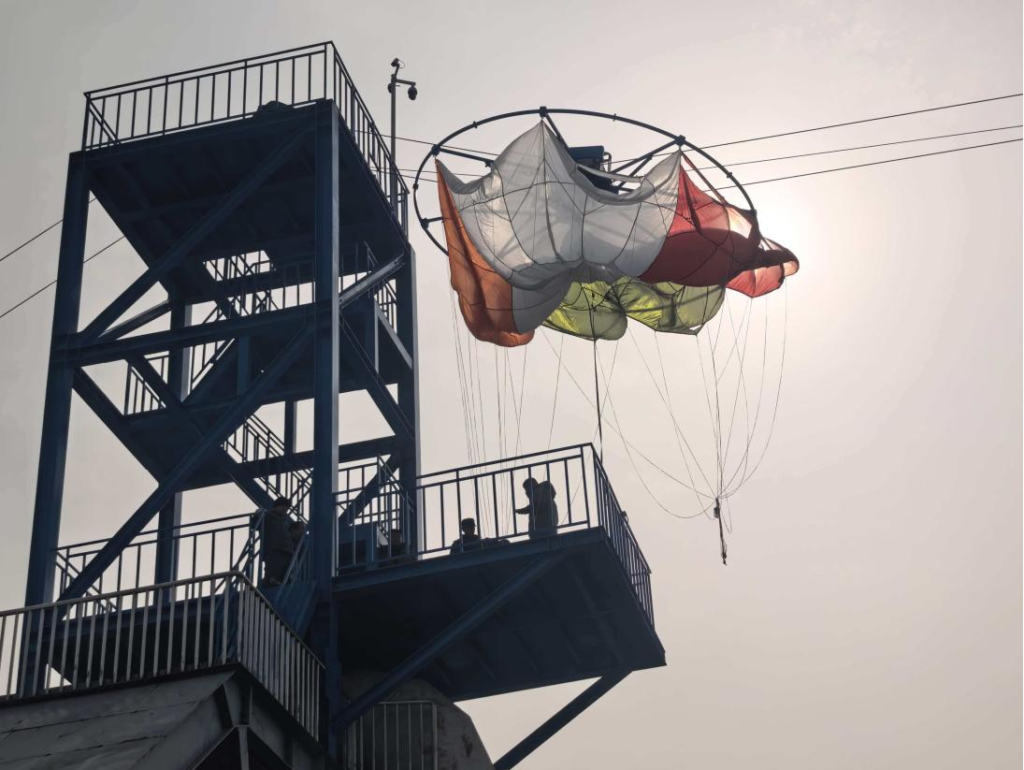
In aerial tramway transportation systems, the design and selection of power units directly determine operational efficiency and safety. This article delves into how winches serve as the “power brain” for trolley traction in aerial tramways, analyzing engineering requirements and incorporating real-world test parameters.
I. Project Background
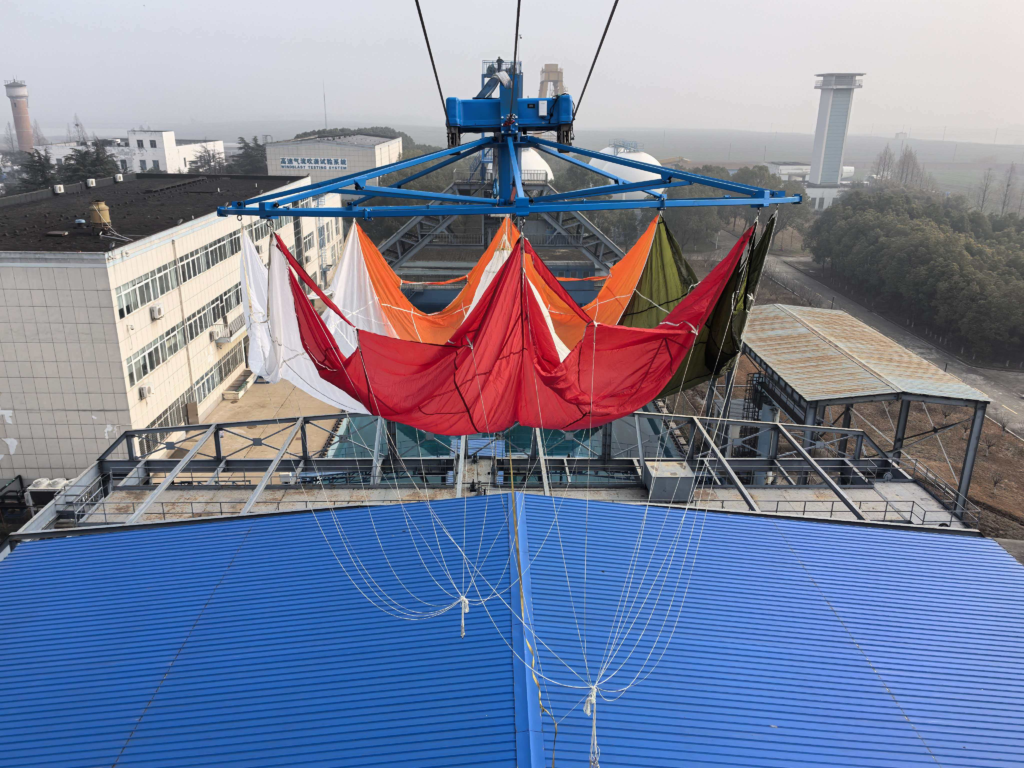
A 100-meter-span aerial tramway system, supported by two 25-meter towers, features a trolley traveling back and forth along the cable for:
✔ Aerial material transport
✔ Large-item hoisting and deployment
✔ Equipment handling and commissioning
The challenge lies in:
II. Engineering Challenges
📌 01 Large span with significant cable sag Before tensioning:
100m span
Sag exceeding 4.28m
Design requirement: sag ≤ 3m. Otherwise:
Reduced traction efficiency
Increased trolley impact during operation
Shortened cable lifespan
📌 02 Balancing trolley speed and stability Trolley requirements:
➡ ≥2m/s operating speed
➡ Shock-free start/stop
➡ Stable, secure traction force output
📌 03 Complex cable loading requires high safety margin In cable load calculations:
Vertical load approx. 0.255 tons
Safety factor ≥ 3.15
Utilizes D16-6×19S+IWR 1770MPa wire rope
Ensures reliability and safety under prolonged high tension.
III. Overall Solution Architecture
We designed a multi-winch cooperative system:
| Functional Module | Number of Winches | Main Function |
|---|---|---|
| Main traction power unit | 2 | Provides traction power for the trolley |
| Auxiliary return traction | 2 | Controls return speed |
| Steel cable straightening / laying | 4 | Ensures straightness of the steel cable |
| Precision steel cable tensioning | 4 | Controls sagging and ensures safe operation |
| Low-speed auxiliary traction | 8 | Positioning, wiring, and maintenance |
IV. Core Power Unit Details
🟡 01 Main Traction Winch (High Efficiency & Stability)
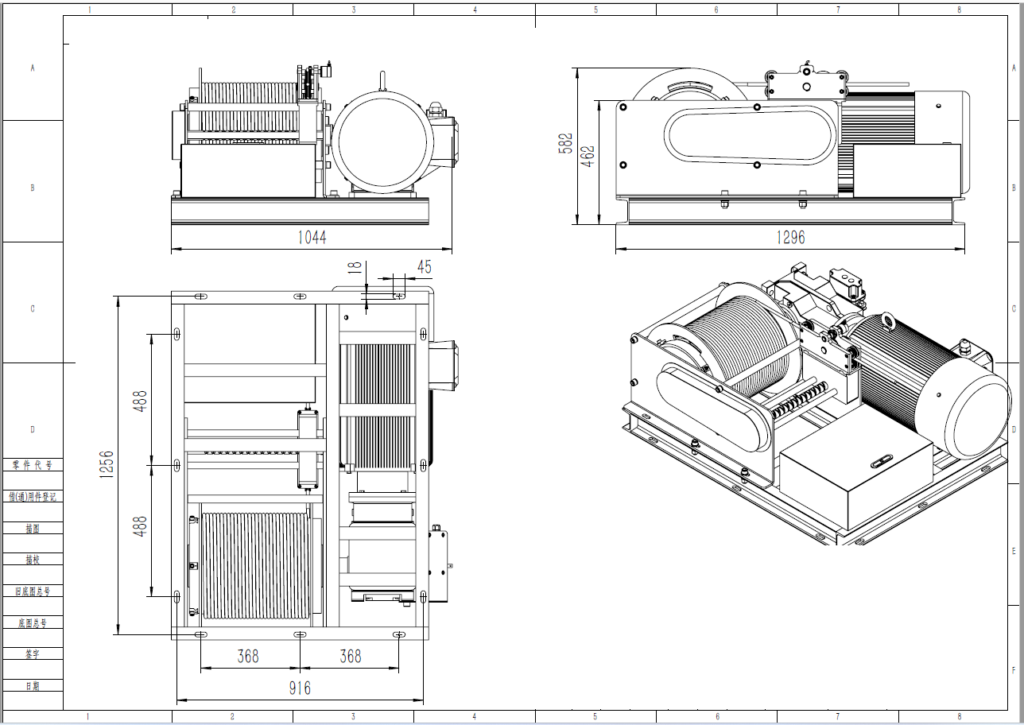
Key Parameters:
Motor Power: 15kW
Reduction Ratio: 14.45
Output Speed: 101 rpm
Cable Speed: 120 m/min
Guaranteed Operating Speed ≥2 m/s
This unit serves as the primary propulsion force for the trolley, meeting high-speed operation demands in large-span scenarios.
🟢 02 Cable Tensioning & Sag Control!
The system integrates a servo electric cylinder + pressure sensor + real-time tension feedback to achieve:
✔ Automatic compensation for cable elongation
✔ Real-time tension control
✔ Precise sag adjustment
The tensioning unit delivers 3× rated cable force, effectively maintaining sag within controlled limits.
🔵 03 Auxiliary Return Module (Stable & Reliable)

Power: 3kW
Cable Speed: Approx. 14m/min
Equipped with electromagnetic clutch
Provides deceleration drive during trolley return, enhancing comfort and safety
V. System Performance Outcomes
🚀 Operational speed meets specifications
📏 Cable sag controlled at ≤3m
🔩 Ample safety margin
🔄 Stable multi-winch coordinated operation
The entire power system not only meets performance requirements but also achieves:
✔ Smooth starts
✔ Precise braking
✔ Automatic tension compensation
✔ Long-term stable operation
VI. Engineering Highlights Summary
🔹 Core tensioning technology employs servo electric cylinder combination tensioning, enabling real-time automatic cable adjustment and significantly enhancing operational stability.
🔹 Dual-speed operation strategy outperforms single-speed solutions by separating high-speed traction and low-speed return, balancing efficiency and safety.
🔹 Multi-unit coordination enhances system stability through main drive + auxiliary module combinations, enabling more flexible and efficient traction processes.
VII. Suitable Application Scenarios
✔ Aerial material logistics transportation
✔ Large-span cable installations
✔ Industrial testing and equipment handling
✔ Robotic arm/hoisting track systems
VIII. Conclusion
A robust aerial cableway power system relies not on individual components but on system synergy, precision control, and standardized engineering safety. This integrated winch-based power solution not only meets high-efficiency operational demands but also incorporates engineering safety redundancy, serving as an exemplary reference for the aerial cableway industry.
VII. FAQ: Frequently Asked Questions
Q1: Why can't aerial tramways use only one winch? A single winch can only provide power and cannot simultaneously perform:
Tension control
Return speed regulation
Cable laying
Multi-unit coordinated structures are essential for long-span systems.
Q2: Why is limiting cable sag to under 3 meters critical?
Excessive sag leads to:
Increased impact loads on trolleys
Higher running resistance
Accelerated cable fatigue damage
Controlling sag is key to ensuring longevity and stability.
Q3: How do you calculate if a winch meets traction requirements?
Key parameters include:
Wire rope diameter
Rope capacity
Rope speed
Reduction ratio
Dynamic load factor
Safety factor
Confirmation requires load calculations.
Q4: What are the advantages of servo tensioning systems over traditional counterweights?
Advantages include:
Real-time adjustment
Higher precision
Automatic compensation
Compact footprint
Suitable for modern industrial systems.
Q5: What are the three most critical factors for selecting aerial tramway winches?
① Whether pulling force meets design specifications
② Whether rope speed matches operational requirements
③ Whether safety factor meets standards
All three are essential.