


 Linkedin
 Google +
Heavy-duty low-speed twin rope synchronous winch. A K-series plus R-series combined reducer (ratio 5984:1) sits at the centre of the base frame and drives a left and a right grooved drum symmetrically through drive shafts and flange couplings, so both ropes pay out in step. Servo motor 1.5kW with brake, three-phase 220V 50Hz. Case model TH2413.00: rated load 200KN, output torque 54494N.m, rope speed 0.08-0.4m/min, lifting stroke 2.4m, machine weight 6000kg. Stainless steel wire rope Ø28mm, 9m capacity per drum, rope spacing 4850mm. Outline A 6500 × B 2900 × C 1141 mm.
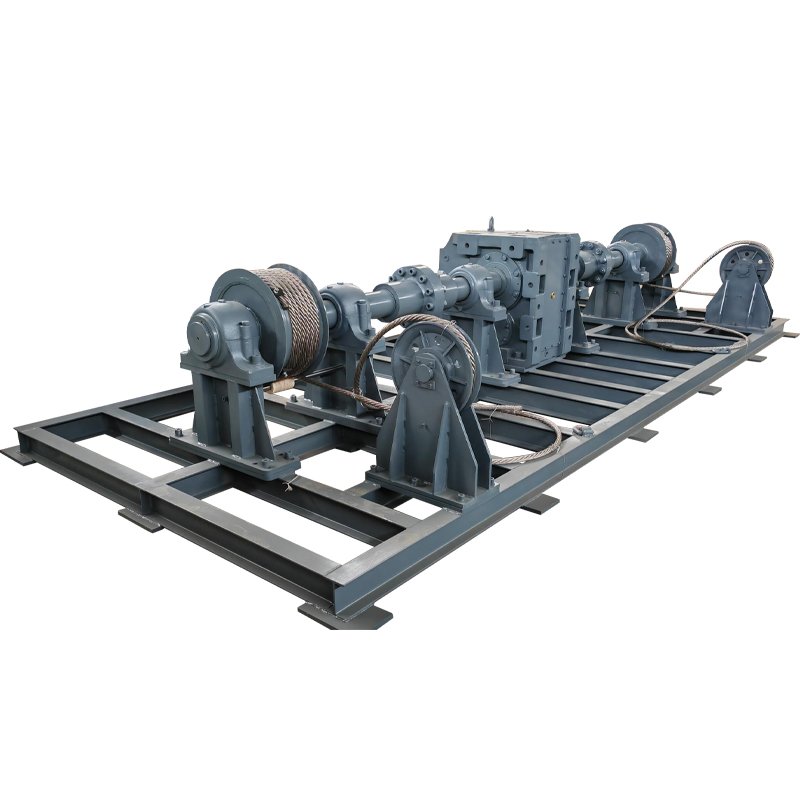


200KN Twin Rope Synchronous Winch 0.4m/min | K Series | KLD
-
A twin rope synchronous winch built for heavy loads moving very slowly. One servo motor and one K-series plus R-series combined reducer sit at the centre of the base frame; three drive shafts and flange couplings carry the torque out to a left and a right grooved drum, so both ropes pay out and haul in together. Rated load 200KN, rope speed 0.08-0.4m/min through variable frequency control, lifting stroke 2.4m. Stainless steel wire rope Ø28mm with 9m capacity per drum. The symmetrical drum layout keeps the load balanced across the frame, and the guide pulleys route each rope out of the drum at the angle the site requires.
Quick Specs
Model: 200 KN (rated lifting load, approx. 20 t)
Motor: 1.5 kW servo with brake, three-phase 220V, 50Hz, model MS6H-130TL15BZ12P3
Reducer: K-series + R-series combined, model KA187R97, ratio 5984:1
Output torque: 54494 N.m
Rope speed: 0.08 - 0.4 m/min (variable frequency)
Application Scenarios and Applicable Boundaries
- Heavy component lifting where the load must stay level on two ropes
- Slow positioning and inching of large fabricated structures
- Test rig and laboratory lifting where travel speed must stay very low
- Stage and display machinery requiring two-point synchronous suspension
- Industrial maintenance where a compact footprint and a long base frame suit the site
- Replacement of hydraulic or manual lifting on heavy, low-speed duty
Features Benefits
A K-series hollow-shaft reducer combined with an R-series unit gives a single reduction ratio of 5984:1. The low output speed is produced by the reducer rather than by throttling a fast motor, so the drive runs at a low, stable output speed with high torque multiplication. Reducer output torque is 54494 N.m.
The left and right grooved drums sit symmetrically on either side of the central drive. Three drive shafts with flange couplings carry torque out to both drums. Because the drive is centred, the reaction torque is split between the two halves of the base frame instead of being concentrated at one end, and the two ropes are driven from one common power source rather than from two independent ones.
Each shaft joint uses a flange coupling: two flanged hubs bolted face to face, with a machined register to keep the two shafts concentric. Compared with a keyed sleeve or a chain coupling, a flange coupling transmits higher torque in a shorter axial length and keeps the joint rigid.Complete Technical Specifications

Modelo: 200 KN Potencia del motor: 1,5 kW Relación de transmisión de la caja de cambios: 5984:1 Velocidad de salida de la caja de cambios: 2,3 r/min Par de salida: 54494 N.m Velocidad de desenrollado del cable: 0,8-0,4 m/min Capacidad de elevación: 200 KN Carrera de elevación: 2,4 m Peso propio: 6000 kg Wireropediameter: 28 mm Capacidad de la cuerda del tambor: 9 m Modelo: 200 KN A (Longitud): 6500 mm B(Ancho): 2900 mm C(Altura): 1141 mm Size Installation and System Interface
Outline A (length) 6500 mm × B (width) 2900 mm × C (height) 1141 mm.
Base frame: nominal height 148 mm with a 16 mm top plate, split into five bays of 1300 mm.
Transformer shaft centre height 635 mm; a second reference height of 783 mm is marked on the drawing.
Drive shaft diameter Ø160 mm. Drum Ø550 mm with a 434 mm barrel and Ø445 mm flanges.
Distance between the two rope centrelines: 4850 mm per the technical notes, 4899 mm as dimensioned on the view.Control Safety and Protection
- Mount on a level, rigid foundation. The base frame is 6500 mm long; shim along its full length rather than only at the ends, so the frame does not carry a bending load between supports.
- The rated load of 200 kN acts on a 6000 kg machine, so the holding-down arrangement must be designed by the customer's structural engineer for the rated load plus the applicable dynamic factor.
- Keep the rope lead angle within the guide pulley's intended range and check that the rope does not rub the drum flange.
- Because both drums are driven from one central reducer through flanged shafts, the frame must stay flat along the full 6500 mm; a twisted foundation loads the couplings and the bearings.
- The two rope exits are 4850 mm apart. Confirm the load's suspension points before ordering, because this spacing is set by the drum positions.
Customization Options and Engineering Process
Configured around your operating conditions — Share the required lifting load, rope travel and diameter, operating speed, duty cycle, power supply, installation envelope and environment. KLD will review the application and provide a proposed configuration, technical drawing and quotation for approval.
Requirements → Concept → Drawing & Quotation → Approval → Production & Test → Delivery
Standards Testing and Quality
The company operates an ISO 9001 quality management system. CE conformity documents (LVD, EMC) are available for applicable configurations on request.

Factory testing follows the approved technical specification for each configured unit and may include: no-load run, rated-load operation, twin-rope synchronization check, limit function and control verification. Available documentation may include dimensional drawings, electrical diagrams, inspection records and functional test results, depending on project scope.
Engineering Cases
a customer in the aviation equipment sector needed to lift and hold a heavy assembly on two points at very low speed.
What was supplied: a twin drum synchronous winch, model TH2413.00, rated 200 kN, driven by a 1.5 kW braked servo motor through a K-series plus R-series combined reducer (5984:1). Two grooved drums Ø550 mm, stainless steel wire rope Ø28 mm, 9 m capacity per drum, 2.4 m lifting stroke, base frame 6500 mm long, machine weight 6000 kg.
Why this configuration: the load had to stay level, so both ropes are driven from one central reducer rather than from two independent drives. Rope speed had to stay in the 0.08-0.4 m/min band for controlled positioning, which is why a servo drive and a 5984:1 reduction were used instead of a faster motor with a brake.
Note: customer name withheld at the customer's request; the drawing file carries a project identifier which has been removed from this document.
Technical Data Download
Downloads:
- Product Datasheet (PDF)
- General Arrangement Drawing (PDF)
- Installation & Operation Manual (PDF)
- Request CAD / Electrical Drawing
Delivery Packaging and Lifecycle Support
Most winches are custom-made products; lead time is confirmed after technical approval and order review. Project support can include configuration review, drawing approval, factory testing, export packaging, remote commissioning support and recommended spare parts. On-site measurement and installation support are available for applicable projects. -
-
What are the case specifications?
Model TH2413.00 twin rope synchronous winch. Rated lifting load 200 kN (about 20 t). Servo motor 1.5 kW with brake, three-phase 220V 50Hz, model MS6H-130TL15BZ12P3. K-series plus R-series combined reducer, model KA187R97, ratio 5984:1, output torque 54494 N.m. Rope speed 0.08-0.4 m/min. Lifting stroke 2.4 m. Machine weight 6000 kg. Two grooved drums Ø550 mm with 434 mm barrels and Ø445 mm flanges. Stainless steel wire rope Ø28 mm, 9 m capacity per drum, rope spacing 4850 mm. Outline A 6500 × B 2900 × C 1141 mm.
-
Why is the reducer output speed not quoted in the headline specifications?
The published figures state an output speed of 2.3 r/min. Checked against three independent relationships, that figure does not reconcile: at 54494 N.m it would need about 13 kW, while the motor is 1.5 kW; multiplied by the 5984:1 ratio it would require a motor input of about 13763 rpm; and at Ø550 mm it would give about 3.97 m/min of rope speed, while the stated range tops out at 0.4 m/min. A value of 0.23 r/min reconciles all three at once. We therefore quote rope speed (0.08-0.4 m/min) and output torque (54494 N.m), both of which reconcile, and we are confirming the output speed with the engineering department before publishing it.
-
How do the two ropes stay synchronised?
Mechanically, not electronically. Both drums are driven from one central reducer through three drive shafts and flange couplings, so they share a single rotational reference. There is no second motor that could drift out of step. The drum grooves keep the lay of both ropes identical, so the effective radius is the same on both sides. If your project needs a numeric synchronisation tolerance, state it in the enquiry — the mechanical layout gives the basis for synchronism, but a tolerance value has to be agreed as a specification.
-
obtener una cotización
Productos relacionados
-
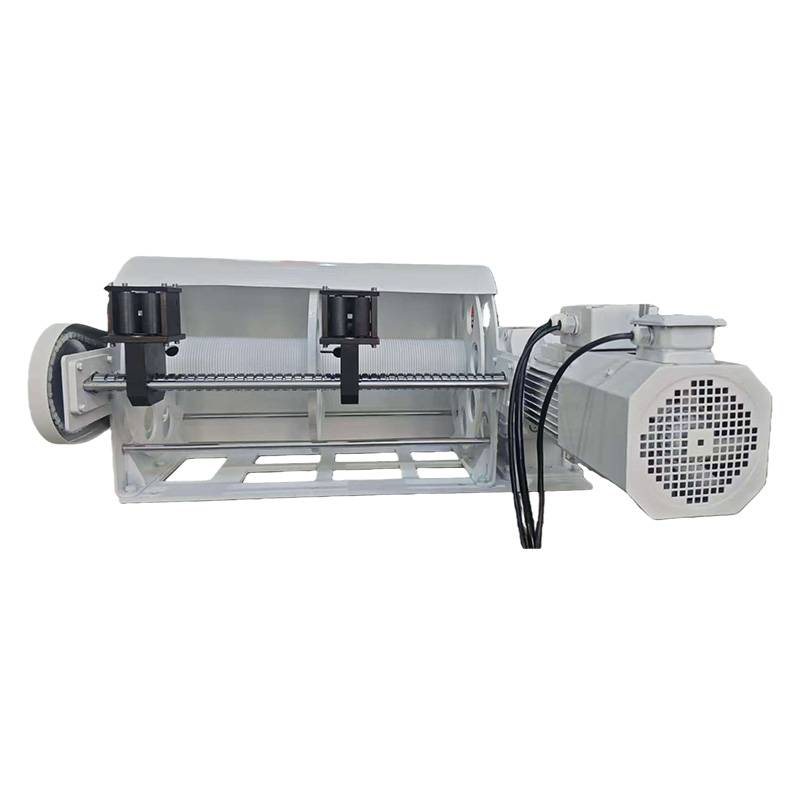
Cabrestante eléctrico síncrono de doble cable
-

Cabrestante eléctrico síncrono de doble tambor
-

Cabrestante eléctrico síncrono de doble cable para izado de muros cortina.
-

Cabrestante eléctrico de doble tambor para elevación de lámparas de araña grandes.
-

Cabrestante umbilical a prueba de explosiones para operaciones en minas de carbón.
-

Cabrestante de doble tambor de alta eficiencia y servicio pesado
-
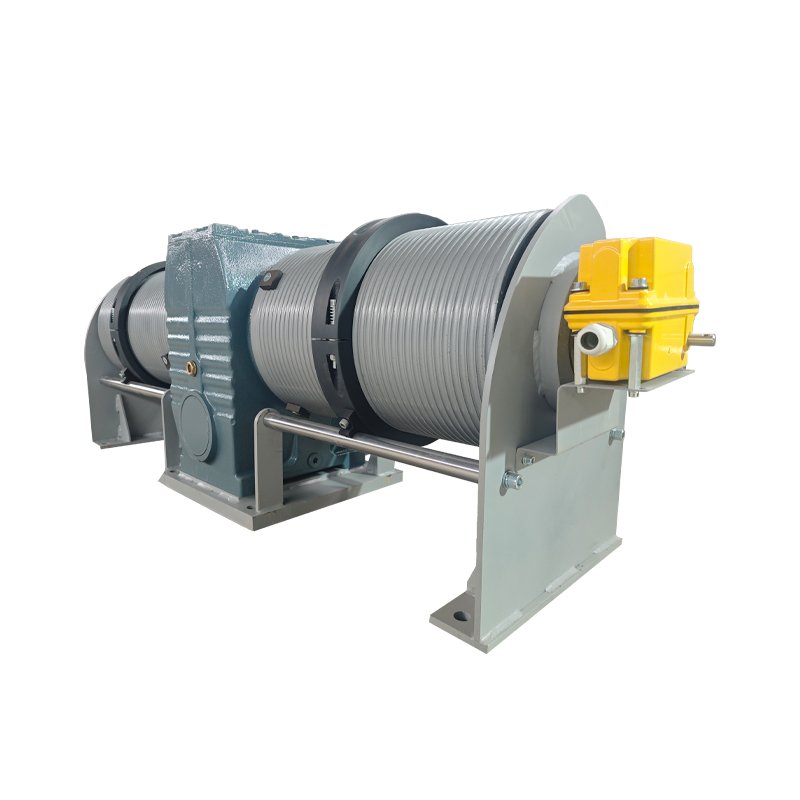
Servo Double Drum Winch 2 Ton Motor 5kW | KLD
-
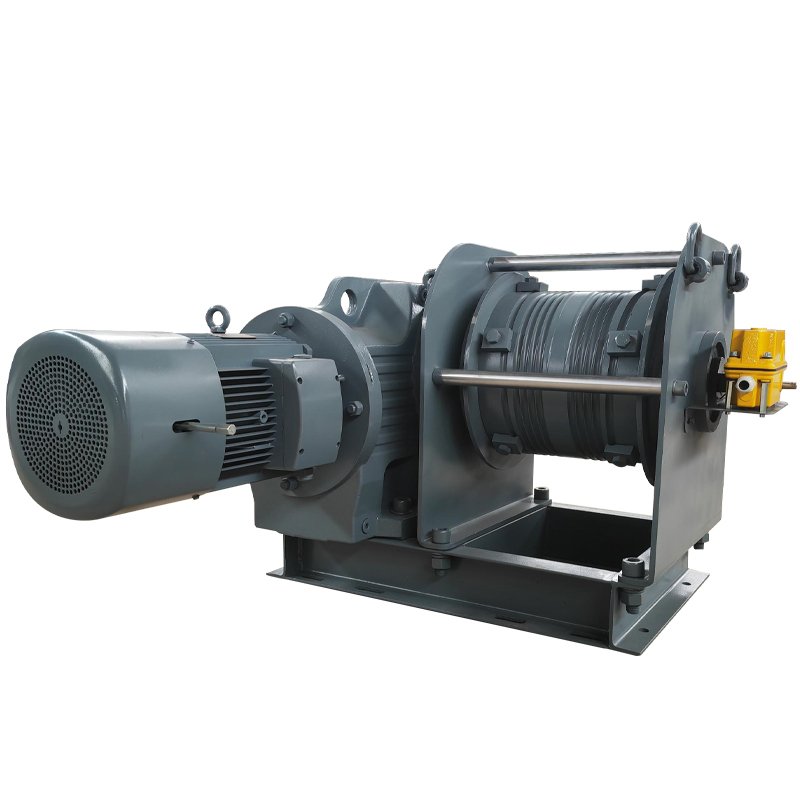
3000kg Twin Rope Synchronous Winch 10m/min | K Series | KLD