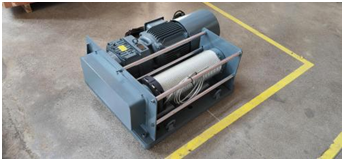
Heavy-Duty Industrial Winch Selection Guide:Key Parameters, Applications and Purchasing Recommendations
1. What Types of Projects Require a Heavy-Duty Industrial Winch?
Based on extensive experience working with engineering and industrial clients, if your project involves any of the following conditions, it has already entered the scope where a heavy-duty industrial winch is not optional—but necessary.
● Heavy Load Handling
If you need to pull or lift 5 tons, 10 tons, 20 tons, or even over 50 tons of equipment, steel structures, cable reels, or large mechanical components, manual handling is impossible and standard construction winches are unsafe.
A heavy-duty industrial winch provides:
- Higher pulling force
- Longer wire rope capacity
- Stronger and more stable drum structure
This ensures safe and efficient operation under high-load conditions.
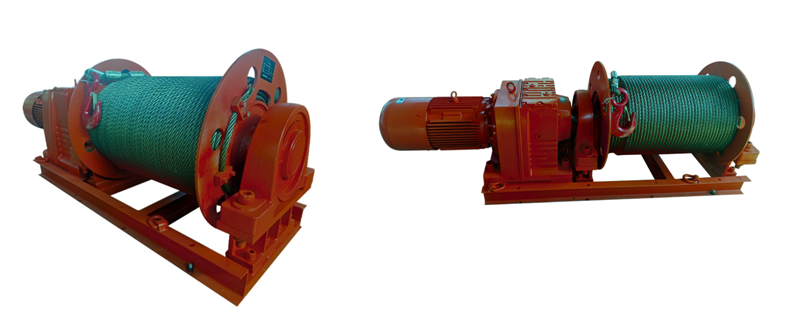
● Harsh and Complex Working Environments
Are you operating in any of the following environments?
- Offshore platforms, ports, ship decks
- Tunnels, mines, subway construction sites
- Outdoor conditions with rain, salt spray, heavy dust, or corrosion
These applications typically require:
- Corrosion resistance
- Waterproof / submersible protection
- High-strength continuous-duty capability
- A highly reliable drive system (hydraulic, electric, or pneumatic)
● High-Frequency, Long-Duration Operation
If your application involves frequent lifting or pulling throughout the day, hydraulic winches or heavy-duty electric winches are significantly more durable and safer than standard equipment designed for intermittent use.
2. How to Select the Right Industrial Winch? (Complete Selection Logic)
To choose the most suitable winch, the following core parameters must be clearly defined. These are also the key details any professional winch manufacturer will require.
(1) Maximum Pulling Force / Rated Load
How many tons do you need to pull or lift? Are there peak loads?
A general engineering recommendation:
Rated load ≥ actual working load × 1.5 (or even ×2 for safety-critical applications)
(2) Operating Mode
- Horizontal pulling
- Inclined pulling
- Vertical lifting
Different modes require different winch structures.
For example, vertical lifting applications must use winches equipped with reliable braking systems.
(3) Power System
- Is three-phase power available?
- Is an explosion-proof motor required?
Based on site conditions, the winch can be configured with electric, hydraulic, or pneumatic drive systems.
(4) Wire Rope Diameter, Length, and Drum Capacity
If your application requires 100–300 meters of wire rope, the drum must be properly sized in both volume and structural strength to ensure safe winding and long service life.
(5) Control Method
Available options include:
- Local push-button control
- Wired remote control
- Wireless remote control
- PLC or automated system integration
The control solution should match the equipment type and operating precision required.
(6) Installation Method
Common installation options include:
- Base-mounted
- Deck-mounted
- Vehicle-mounted
- Bridge or steel-frame mounting
In many cases, a single site photo is enough for an experienced engineer to recommend the most suitable installation method.
3. Core Value of a Heavy-Duty Industrial Winch
✔ Superior Safety
Stable torque output, multiple braking systems, shock resistance, and anti-rope-slack protection provide a level of safety far beyond traditional handling methods or light-duty winches.
✔ Significant Efficiency Improvement
For example, moving a 10-ton steel structure:
- Manual handling or forklifts may take half a day
- A properly selected industrial winch can complete the task in 10 minutes
✔ Long Service Life and Lower Long-Term Cost
Based on customer data:
- Heavy-duty industrial winches typically operate 3–5 years with minimal major maintenance
- The higher the load, the more clearly the long-term value is demonstrated
✔ Fully Customized to Match Your Application
You provide the working conditions—we configure the winch accordingly, including:
- Pulling capacity
- Motor power
- Corrosion protection level
- Explosion-proof rating
- Wire rope specification
- Control panel
- Mounting base
- Surface coating system
Every detail is tailored to your project requirements.
4. Get a Dedicated Winch Solution for Your Project
If you are planning a new project or replacing existing equipment, simply provide as much of the following information as possible:
- What are you pulling or lifting, and how much does it weigh?
- Horizontal pulling or vertical lifting?
- Operating environment (outdoor, offshore, factory, underground, etc.)
- Explosion-proof or corrosion-resistant requirements?
- Required wire rope length?
- Available power supply?
- Budget range?
- Delivery time requirement?
The clearer the information, the more accurate the configuration—and the faster you can receive a professional solution and quotation.