System-Level Engineering Optimization Pathways for Explosion-Proof Winches in High-Temperature Explosive Oilfield Environments
Why Does “Conventional Design” Inevitably Fail in Oilfields?
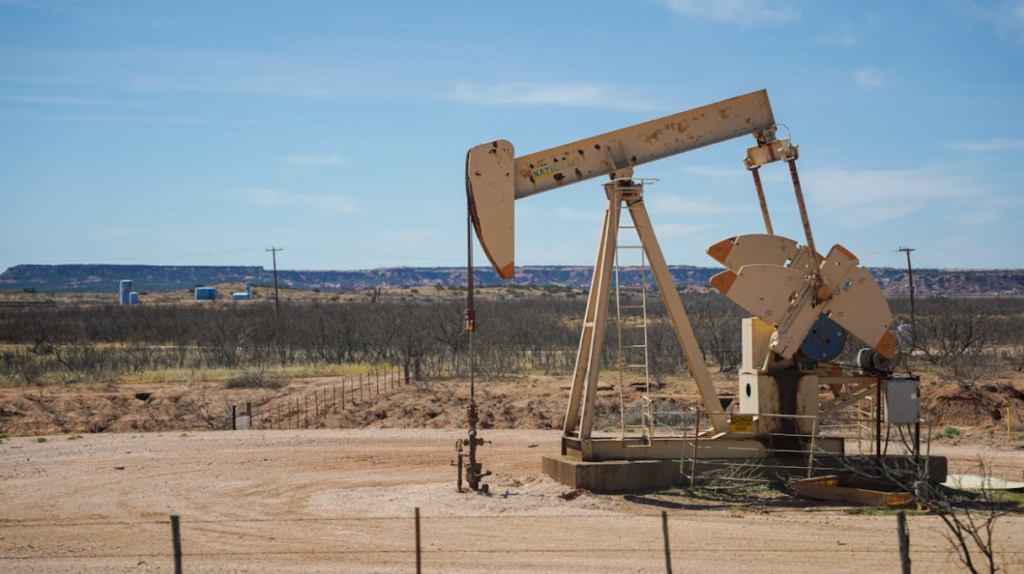
In high-temperature explosive oilfields like Iraq's EBS Oilfield, winches are not “isolated equipment” but engineering systems continuously exposed to extreme conditions:
- Ambient temperatures consistently ≥50°C
- Explosive gas Zone 2
- Extended continuous operation cycles
Limited maintenance windows
Under these conditions, any design that merely “meets standards without considering cumulative effects” will progressively reveal flaws during operational cycles.
What Does Engineering Optimization Truly Address?
The project's genuine expectation for optimization is not:
“Slightly higher performance”
But rather:
Continuously reducing failure probability without significantly increasing complexity.
This means the optimization goal is clear:
Avoid pursuing extreme parameters
Avoid configuration stacking
Refrain from introducing uncontrollable variables
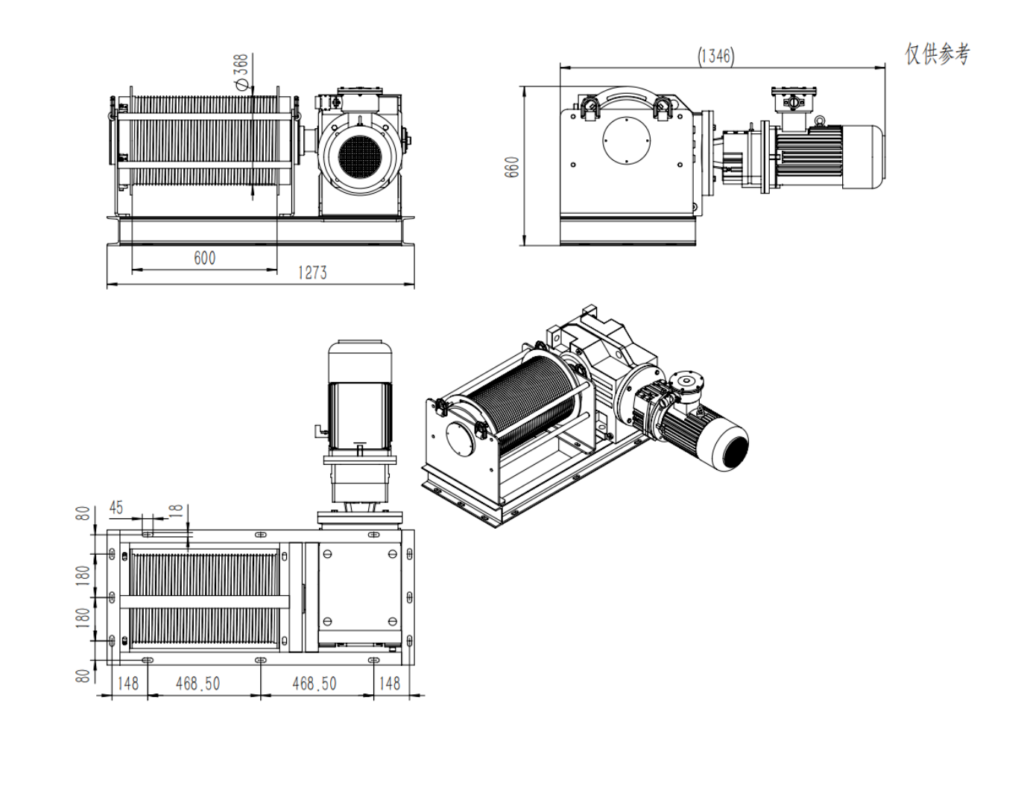
System-level vulnerabilities in oilfield winches
During preliminary engineering assessments, the project team identified three categories of “high-probability failure sources”:
1️⃣ Structural stress concentration
Under high-temperature conditions, changes in material elastic modulus amplify structural stress concentration issues.
2️⃣ Inadequate thermal management
While explosion-proof enclosures enhance safety, they inherently compromise heat dissipation capabilities.
3️⃣ Mutual amplification effects among subsystems
Braking, transmission, motor, and control systems do not operate independently; anomalies in any component are amplified system-wide.
Engineering Optimization Strategy for This Project
This project avoided “single-point reinforcement” in favor of system-level optimization:
Optimization 1: Structural path optimization, not material thickening
Redesigned stress paths using L-shaped structures to reduce localized stress peaks, rather than simply increasing material thickness.
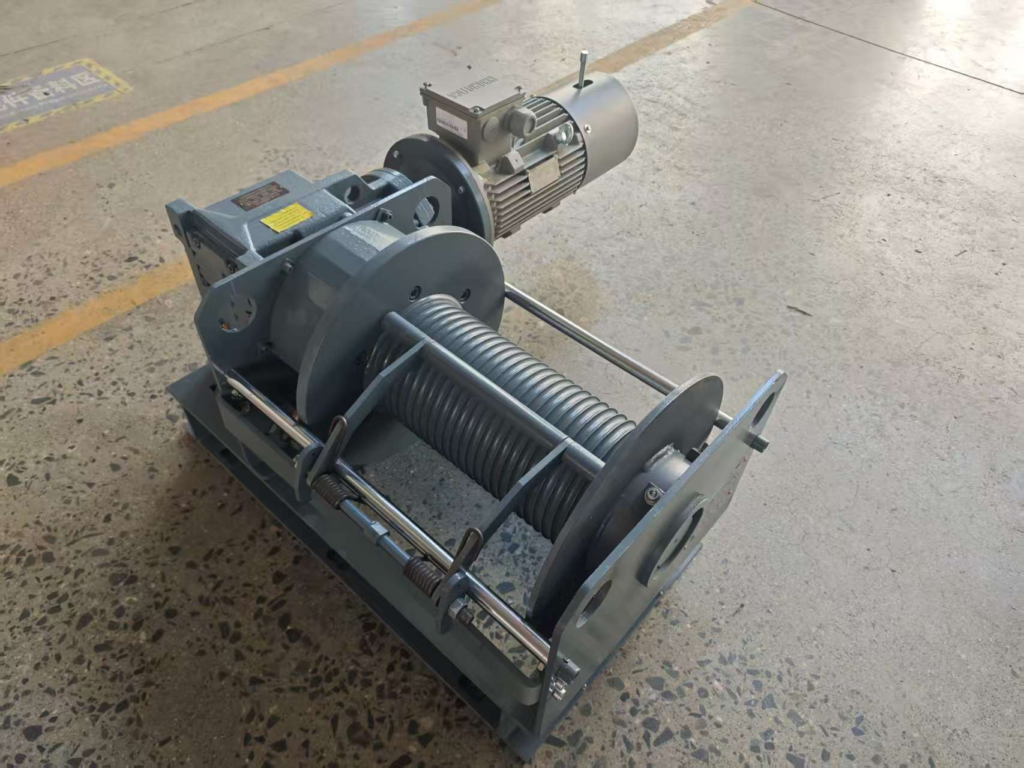
Optimization 2: Proactively Allocating Thermal Space for Explosion-Proof Structures
Incorporated thermal redundancy during explosion-proof housing design, avoiding passive derating during operation.
Optimization 3: “Dimension Reduction” in Control Systems
Eliminated redundant control logic, anchoring safety actions within deterministic mechanisms.
The Core Logic of Engineering Optimization
The essence of oilfield engineering optimization lies not in “achieving perfection,” but in:
Avoiding “just barely sufficient” performance.
Because in oilfield environments, “just barely sufficient” = “inevitable failure.”
A truly mature optimization solution ensures the system remains within safe operating limits even after future aging, thermal degradation, and cumulative wear.
Optimization Results Validation
In actual EBS Oilfield operations:
No structural fatigue anomalies occurred
No performance degradation due to thermal accumulation
Control and braking behaviors remained consistently aligned over time
This proves the effectiveness of the system-level optimization strategy.
FAQ
Q1: Why not address the issue by increasing material strength?
A: Material strength cannot resolve thermal stress and system coupling issues; it may instead introduce new risks.
Q2: Does explosion-proof design necessarily compromise reliability?
A: Not if explosion protection and thermal management are designed concurrently.
Q3: Why emphasize “reducing complexity”?
A: In high-temperature oilfields, complexity itself is a failure source.
Q4: Does engineering optimization increase costs?
A: Not necessarily. System-level optimization is often more economical than post-failure maintenance.