Why do problems with explosion-proof winches in oilfields often not appear right from the start?
The True Lifecycle of Oilfield Equipment
The defining characteristic of oilfield equipment is:
It either functions flawlessly or fails catastrophically.
This stems from the inherent challenges of oilfield environments:
Cumulative high temperatures
Accumulated fatigue
Progressive corrosion
These conditions create a chronic, lethal operating scenario.
The Hidden Project Objective
The true project goal is:
Equipment must not reveal systemic flaws throughout its lifecycle.
Not merely:
“Performing well during initial installation” .
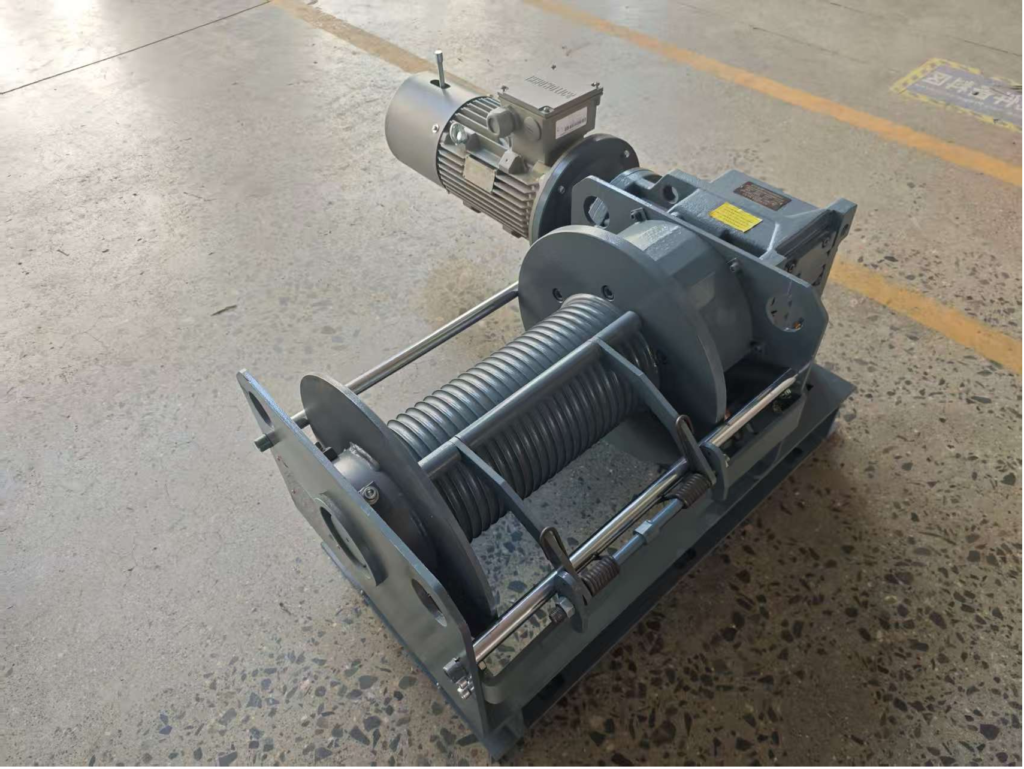
https://kldwinch.com/precision-dual-rope-synchronous-electric-winch/
Three Hidden Challenges in Oilfield Winches
Challenge 1: Thermal Stress Doesn't Cause Immediate Failure
High temperatures don't instantly burn out equipment. Instead, they:
Alter material structure
Change lubrication properties
Modify electrical lifespan curves
Result:
No issues visible for 3 months, but failures cluster after 3 years.
Challenge 2: Explosion-Proof Structures Are a Double-Edged Sword
Explosion-proof enclosures:
✔ Enhances safety
❌ But reduces heat dissipation capacity
Common project pitfalls:
Explosion protection is correct, but thermal management is incomplete.
Challenge 3: Interactions Between Engineering Systems
For example:
Brake system temperature rise → Compounded with motor temperature rise
Wire rope friction → Compounded surface temperature rise
Control delays → Compounded mechanical impact
Oilfield accidents rarely stem from a “single cause.”
How this project proactively addressed it

Project strategy:
1) Prioritize environmental conditions over equipment parameters
Calculate environmental factors first, then select equipment.
2) Simulate “future aging” during design phase
Don't ask:
“Will it fail now?”
Instead ask:
“Where will it fail in 5 years?”
3) Proactively sacrifice efficiency
Example:
Reduce operating speed
Increase structural margin
Reduce control complexity
The true logic of oilfield engineering
The design philosophy for oilfield equipment is:
Eliminate accidents before they occur.
Rely not on monitoring systems to save lives, but:
Prevent accidents from having any chance to happen.
Field results
During actual operation, this winch:
Experienced no delayed failures
Showed no thermal degradation issues
Displayed no structural fatigue anomalies
Confirming the correct identification of critical challenges.
FAQ
Q1: Why do many oilfield equipment issues surface years later?
A: Because high temperatures and fatigue cause cumulative damage, not instantaneous failure.
Q2: Does explosion-proof design impact equipment lifespan?
A: Yes, if thermal management is inadequate.
Q3: Are oilfield accidents usually caused by a single factor?
A: Rarely. They typically result from cumulative system effects.
Q4: Why do oilfield equipment designs sacrifice efficiency?
A: Because stability takes precedence over efficiency.