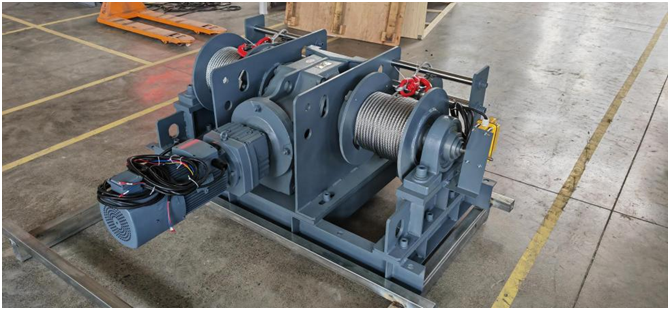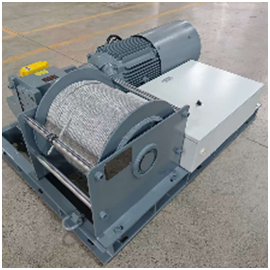


High-rise window-cleaning robots need controlled cable handling throughout every lift. A typical system carries a water hose for high-pressure cleaning and a 220 V power and communication cable. A customized winch system keeps both lines moving with the robot, within a rooftop installation space exposed to heat, sunlight and wind.
This Dubai project shows how KLD (Tianheng Kairui) configured a dual-winch system for a window-cleaning robot manufacturer. The solution combined servo drives, PLC synchronization, automatic cable layering and a lightweight aluminum structure. The design evaluated the complete cable-handling system together with the load requirement.
The Cable-Handling Challenge in High-Rise Window Cleaning
The customer’s robot operates on high-rise façades. Two separate winches are installed at the roof level: one manages the water hose and the other manages the power and communication cable. Both lines must follow the robot’s lifting and lowering motion.
The project required engineering attention in five areas:
- Dual-cable synchronization: A speed difference between the two winches can create cable slack, excessive tension or uneven loading.
- Limited rooftop space:The equipment had to fit a compact installation area and remain light enough for manual positioning.
- Variable operating speed:The winch speed had to follow different robot movements across the operating range.
- Multi-layer winding: Long cable runs required orderly layering on the drum to reduce compression, tangling and signal interruption risks.
- Outdoor exposure: Rooftop equipment in Dubai requires material and sealing choices suited to high temperature, sunlight and wind.
The customer had evaluated several market products. The project requirements specified an integrated solution with lightweight construction, synchronized control and automatic cable winding.
What the Customer Required From the Customized Winch System
The technical brief defined the following requirements:
| Requirement | Project specification |
| Sincronización | Two winches with coordinated lifting and lowering |
| Conducir y controlar | Servo motor drive with PLC programming and robot-system interface |
| Fuerza de tracción nominal | 40 kg for the cable and hose load |
| Velocidad de la cuerda | Continuously adjustable from 0.1 to 0.4 m/s |
| Weight target | Equipment weight below 50 kg; delivered unit approximately 40 kg |
| Environmental use | Outdoor operation with heat and corrosion considerations |
| Personalización | Cable length and drum specification matched to building height |
These requirements defined the system architecture. The 40 kg figure in the technical specification refers to rated pulling force; the approximately 40 kg figure refers to equipment weight.
KLD’s Customized Winch Solution
KLD supplied a dual-winch synchronized lifting system with three coordinated sections:
- Cable winch: Handles the 220 V power and real-time communication cable.
- Water-hose winch: Manages the high-pressure water hose used by the cleaning robot.
- Synchronization and control system: Uses servo drives and PLC master-slave control to coordinate both winches and provide a standard communication interface for the robot control system.
The drum size and cable length were configured around the building height and available installation area. The compact arrangement also reserved space for a 150 mm drum and its cable-layering mechanism.
Key Design Features of the Customized Winch
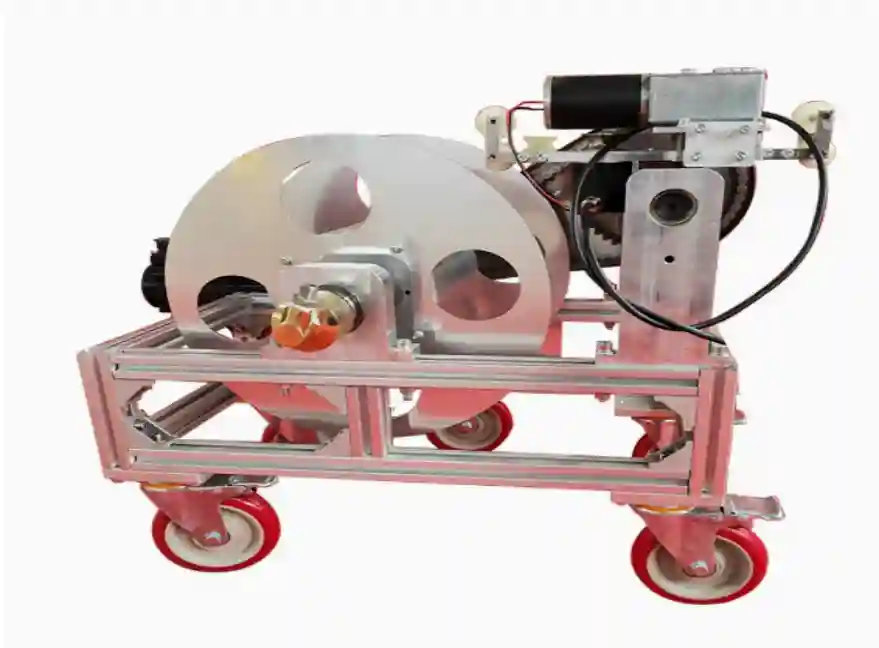
Lightweight Aluminum Construction
The winch body uses an aluminum-alloy structure. The delivered equipment weighs approximately 40 kg, which supports rooftop positioning and manual handling. Aluminum also provides corrosion resistance relevant to outdoor installation. The project design targeted equipment weight below 50 kg.
Servo Drive and PLC Synchronization
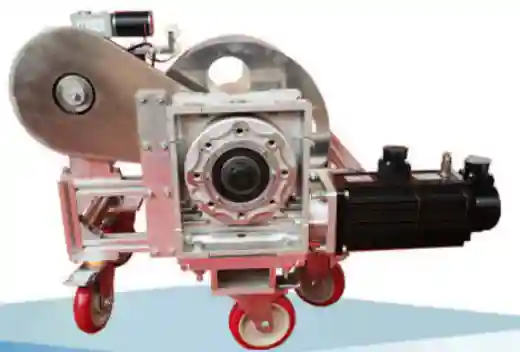
Each winch uses a 1.2 kW servo motor and a 60:1 precision gearbox. The specified output speed is 23.5 r/min. Servo feedback supplies position data, while PLC logic coordinates the two winches and compensates for small motion differences during operation. The control interface can connect with the customer’s robotic equipment.
Automatic Cable Layering
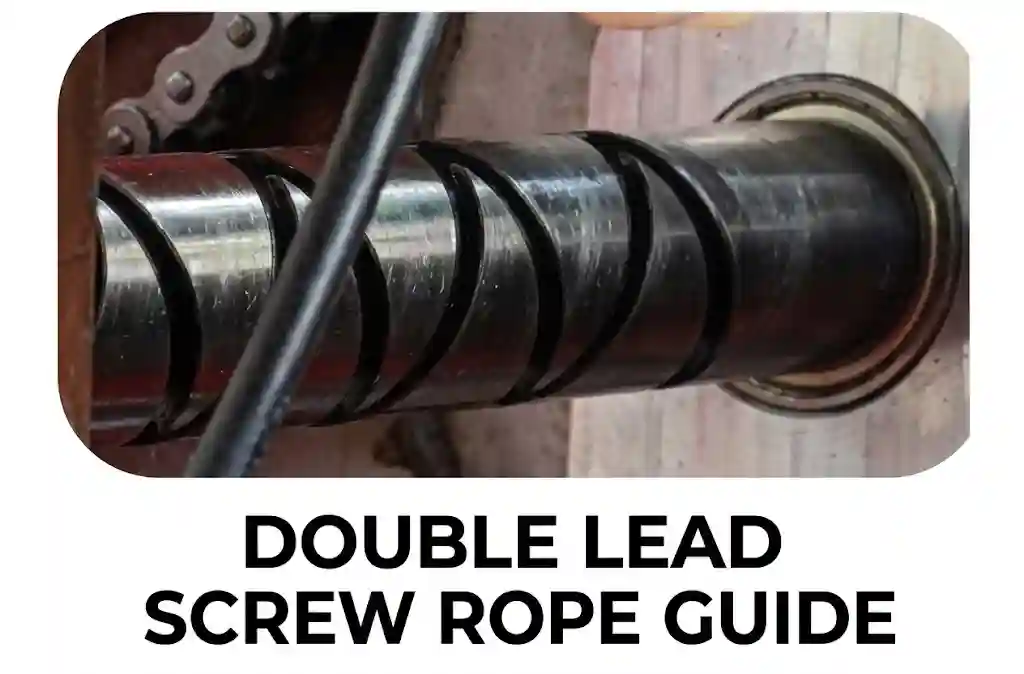
The drum uses a 150 mm winding space with a reciprocating screw cable guide. The guide places multiple cable layers in an orderly pattern across the drum. This mechanical arrangement supports consistent winding and helps reduce tangling and irregular stacking during long-distance operation.
Continuously Adjustable Rope Speed
The cable speed is adjustable from 0.1 to 0.4 m/s. This range allows the winch motion to follow different robot lifting and lowering rates. Matching the cable speed to the robot helps manage slack and excessive pull during movement changes.
Compact and Portable Installation
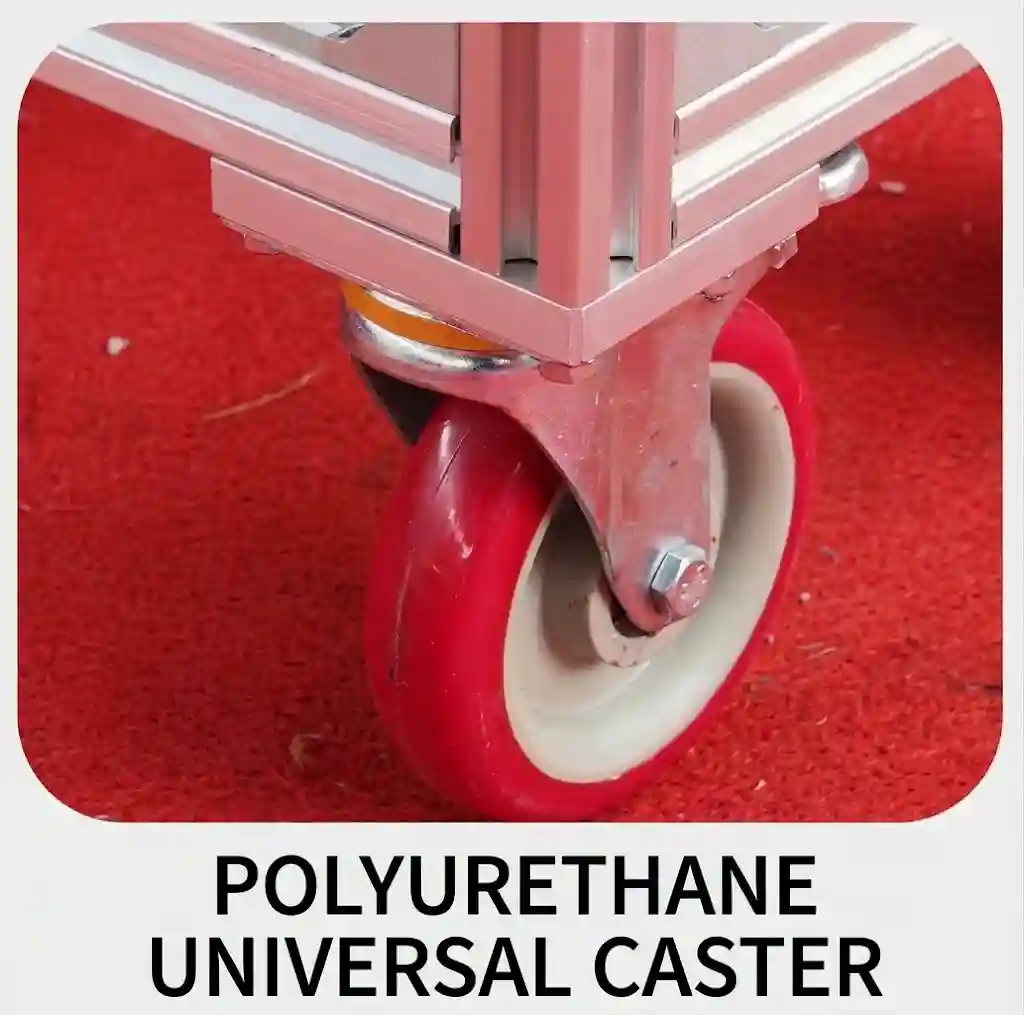
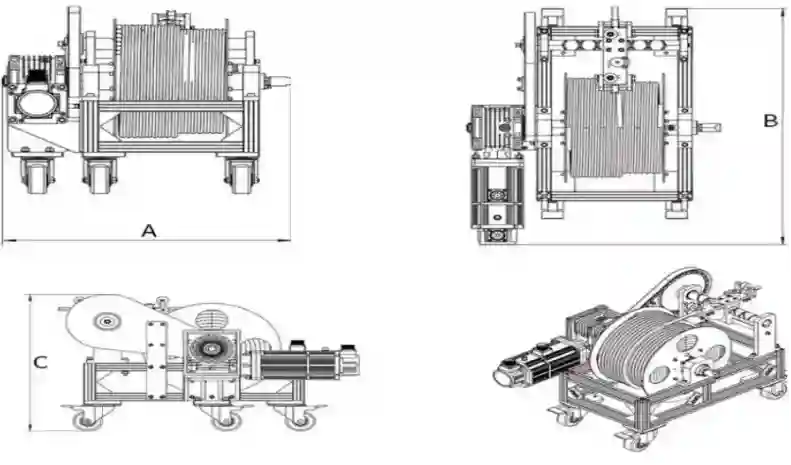
The specified overall dimensions are 536 × 758 × 526 mm. Polyurethane swivel casters support movement into position without a lifting device. The modular layout also gives maintenance personnel access to replaceable components.
Technical Parameters of the KLD Winch System
| Parámetro | Especificación |
| Marca | KLD / Tianheng Kairui |
| Equipment type | Industrial small cable winch |
| Servo-motor power | 1.2 kW |
| Tensión nominal | 220 V |
| Gearbox ratio | 60:1 |
| Velocidad de salida | 23,5 rpm |
| Drum diameter | 150 mm |
| Cable speed | 0.1–0.4 m/s, continuously adjustable |
| Fuerza de tracción nominal | 40 kg |
| Overall dimensions | 536 × 758 × 526 mm |
| Main material | aleación de aluminio |
| Customizable items | Cable length and drum specification |
How the Solution Addresses Project Risks
| Project issue | Engineering response |
| Two cables must move together | Servo drives and PLC closed-loop coordination |
| Rooftop space is limited | Compact aluminum structure with approximately 40 kg equipment weight |
| Cable layers can become irregular | Reciprocating screw cable guide |
| Robot speed changes during operation | 0.1–0.4 m/s continuous speed adjustment |
| Positioning equipment is difficult | Polyurethane swivel casters and modular construction |
| Outdoor heat and corrosion exposure | Aluminum-alloy body and industrial sealing design |
Applications Beyond Window-Cleaning Robots
The same system architecture can support other applications that require controlled handling of power cables, communication lines or hoses:
- High-rise maintenance platforms with synchronized cable and hose deployment;
- Ship and terminal equipment for shore-to-vessel cables and signal lines;
- Emergency power and communications vehicles;
- Mobile industrial robots that need managed power and data cables;
- High-rise firefighting systems that use controlled hose deployment.
Conclusion: When a Customized Winch Becomes the Right Choice
A customized winch becomes relevant when the installation space, cable type, speed profile, control interface and environmental conditions must work together. In this Dubai window-cleaning robot project, KLD matched those conditions through a dual-winch layout, servo and PLC synchronization, automatic cable layering, adjustable speed and a lightweight aluminum structure.
KLD is an engineering-driven industrial winch manufacturer that develops non-standard lifting and cable-handling systems for specialized equipment. For a project review, provide the building or operating height, cable and hose types, required length, pulling force, speed range, installation dimensions and control interface. The design team can then evaluate a customized winch configuration and the related technical documentation. Visit KLD solution page for project contact information.
Preguntas frecuentes
Q1: Why does a window-cleaning robot need two synchronized winches?
A: The robot carries both a water hose and a power and communication cable. Separate winches manage the two lines, so coordinated motion helps control slack, tension and cable routing during lifting.
Q2: What is the rated pulling force of this KLD customized winch system?
A: The specified rated pulling force is 40 kg for the cable and hose load. This value is separate from the equipment weight, which is approximately 40 kg for the delivered unit.
Q3: Can the cable speed match different robot movements?
A: Yes. The specified cable speed range is 0.1–0.4 m/s with continuous adjustment. The final setting depends on the robot movement profile and the project control requirements.
Q4: How does the system support orderly multi-layer winding?
A: A reciprocating screw cable guide distributes the cable across the 150 mm drum winding space. The guide supports regular layering during repeated deployment and retraction.
Q5: Can KLD customize the drum size and cable length for a rooftop installation?
A: Yes. Drum specifications and cable length can be configured around the building height, cable type, available space and control-system interface.