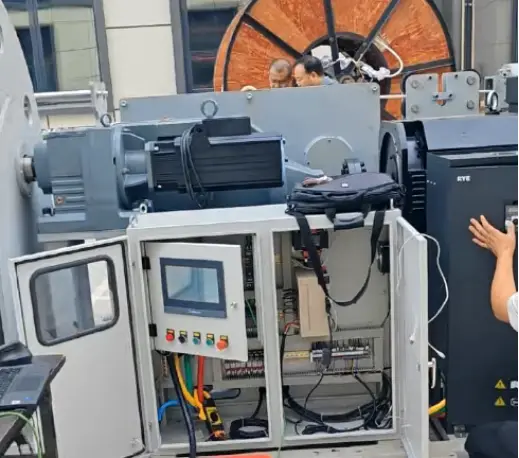


When a heavy load has to go up 30 meters, slide along a rail, and then stop at a specific spot, the winch does a lot of work. Its lifting reach must fit the total working height. Also, the moving carriage needs enough free space to slide. The controls must guide the load to the exact right stops.
For a traveling servo winch, all these needs must be in one single plan. Motor power, drum space, and how well it stops are just parts of the machine. Buyers really need to know how the whole setup will run through a full work cycle.
KLD, the industrial brand of Beijing Tianheng Kairui Lifting Machinery Co., Ltd., supplies industrial winches and custom configurations. Buyers considering its servo winches should begin with the load and movement requirements, then work through the mechanical arrangement and controls with the engineering team.
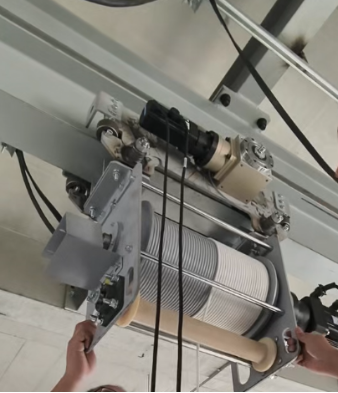
How a traveling servo winch works
A wire or rope rolls up to lift and drop the load. At the same time, a powered carriage pushes the whole thing along a rail. Servo drives and a smart control system handle all the moves you need for your job.
The order of steps changes for each place. Sometimes, a load must reach a safe high point first. Then, the carriage can start moving. Other gear might need a few set stopping spots. Do you need lifting and sliding to happen at the exact same time? Tell the maker during the design phase. This way, they can check if the parts can handle both moves at once.
Please describe one full work cycle before picking any parts. Tell them where to pick up the load. Share how high it goes and where it moves sideways. Next, list the stopping spots and how it goes back. Write down how often this cycle repeats. Also, note how long the machine holds its place.
Use this exact cycle when you look at different sellers. Ask every maker to show how their machine will do these moves. They need to use your weight and your site rules. Look at the real lifting distance, the travel parts, and the controls. Use the same test for everyone. It is much easier to compare choices when all makers look at the same rules.
Allowing enough drum capacity for a 30 m lifting stroke
The drum space needs to hold all the rope that moves. But, it must also keep the needed extra wraps on the drum. Because of this, you must check the real lifting path and the total rope length separately.
Think about a custom design. It has a lifting goal of at least 30 meters. The drum holds 34 m of rope. There are five safety wraps left on the drum. Those numbers show just one setup. If you change the drum, the rope path, or the site, you have to check all those numbers again.
Before you say yes to the plan, check three things. Find the real lifting distance. Check the drum's rope space. Measure the total rope you will install. Trace the rope path through the guide parts. Then, test the free space at both ends of the lift. This stops you from mistaking the total rope length for the real lifting reach.
Rope diameter, winding layers and termination
Our example uses a 6 mm ultra-high-molecular-weight polyethylene fiber rope. Its thickness and the way it ends must match the drum shape. It also must fit the guides and the work space.
When the rope winds in many layers, its real winding width changes. This happens as the rope shifts from one layer to the next. So, each spin of the drum takes in or lets out a new length of rope. Check how fast the rope moves. Make sure the stopping method fits the real winding setup.
Look at the guides and the rope ends while you look at the drum. Enough rope space fixes the length need. However, the whole setup still has to hold the rope safely during the whole lift.
Matching the horizontal travel drive to the rail
The size of the wheels, the motor speed, and the gear setups set the basic carriage speed. But the actual load, rubbing, and drive settings also change how it moves.
One special travel drive uses these exact design numbers:
Motor power: 0.4 kW
Wheel diameter: 105 mm
Total reduction ratio: 165:1
Travel speed: 5.9 m/min
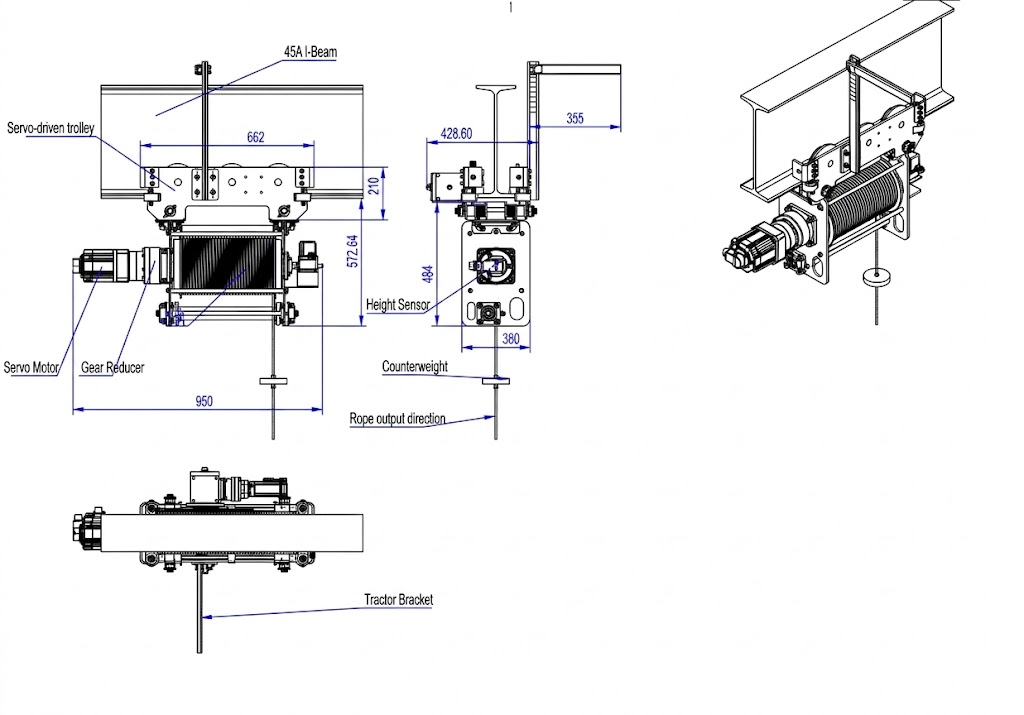
These facts only work for that specific setup. If you change the rail, the movement area, or the work cycle, you need a new check. You must look at the drive and wheel setup all over again.
Make sure the wheels fit the rail. Look at the travel stops and brakes along the whole path. Pay extra care to the very end spots. Free space and repair room there might be different from the middle of the track.
Choose where the power box will go. Figure out how the wires will trail the carriage. Check the lifting rope path when the carriage is in different spots. These layout tests help you find rubbing spots before you say okay to the parts.
What does repeat positioning within 5 mm mean?
A 5 mm repeat stopping rule needs a clear spot to measure. It also needs set test rules. Pick the target spot. Decide where you will check the result before picking the control setup.
Motor spot, machine spot, and hanging load spot are all different things. Looseness in parts, bending metal, and rope stretch can change where the load stops. This happens even if the screen shows the right spot.
Knowing the current spot helps the control system guide the move. Does the whole machine meet the stopping goal? You only know this after a real test. A 5 mm goal is just a plan on paper until a test proves it works under the agreed rules.
Before testing, agree on a few things:
First, the starting mark and the testing spot.
Second, the exact load and lifting hook to use.
Third, which way to move toward the target.
Fourth, how many times to repeat the move.
Last, how to write down and grade the results.
Put these rules in your paper contract. Then, both sides can test the exact same thing. This stops people from arguing about what "5 mm positioning" means later on.
Selecting PLC and servo control functions
Pick control features based on your work steps. Your setup might need screens to show where it is and how fast it goes. You might need short manual moves (jog), planned spots, warning alarms, and a hard-wired emergency stop.
Jog mode lets the worker make small, safe manual moves during setup. Planned stopping takes care of repeated moves to fixed spots. Screens show the spot and speed. Alarms tell you about problems the computer sees.
KLD's PLC-controlled servo electric winch is a related configuration for buyers discussing programmed movement with the engineering team. Confirm which functions and interfaces the traveling assembly will need; the control specification should describe how they will be used during its working cycle.
If the winch talks to a bigger main computer, set up the rules first. Decide this before you start the machine. Pick which system starts the move. Decide what facts must be true before the next step starts. Also, agree on how the machine will report its status. These choices matter for startup and for daily work.

Preparing a custom winch enquiry
Send the maker enough details. They need this to check the movement and the work site. Start with the real load weight. Add the hook weight and the lifting height. Next, add the horizontal travel distance, the target speeds, and how often it works.
A site map should show the rail and the metal supports. It must show the free space and where the electrical cabinet will go. State the power supply and the site weather. Also, list any main computer links and the test rules for stopping spots.
Ask the maker to explain the safe pulling force and lifting capacity for their rope plan. Keep those numbers away from the machine's own weight. If two plans use different starting guesses, they might look the same. But they really show very different working setups.
The metal beams holding it up also need a check. This check looks at the machine, the hooks, the hanging load, and the active working forces. Use an early guess for the equipment weight to plan. Do this until the final setup is set.
KLD's custom-engineered winches cover projects with application-specific requirements. Include the movement sequence and installation drawing with the enquiry so the engineering discussion can address the required configuration, including any unresolved mechanical or electrical interfaces.
FAQs
Is a servo motor enough to achieve 5 mm positioning?
How the load acts depends on many things. It relies on the gears, the metal frame, the rope setup, and the checking sensors. Set the test spot and test rules first. Then, test the whole machine against the goal. Just picking a servo motor does not promise perfect load stopping.
Does a 30 m lifting stroke require exactly 30 m of rope?
No. The rope length must cover the whole path. It must also include the safety wraps left on the drum. You must check the real lifting path, the total rope length, and the drum space all together. You have to prove the real reach at both top and bottom ends of the lift.
Can lifting and horizontal travel operate together?
Check this step during the early design. If you need both moves at once, put it in the paper rules. The maker can then check the part spacing, cable paths, and controls for this exact need. The final tests must include these combined moves.
Discuss your application with KLD
Do this before you order a traveling servo winch. Check the work cycle and the site details with the maker. Write down the agreed load, real travel, and speed rules. Also, record the stopping test conditions and the control links.
To request a configuration review, contact KLD with your winch requirements. Include the load details, movement sequence, installation drawing and positioning target so the engineering team can assess the equipment against the intended task.